What to publish
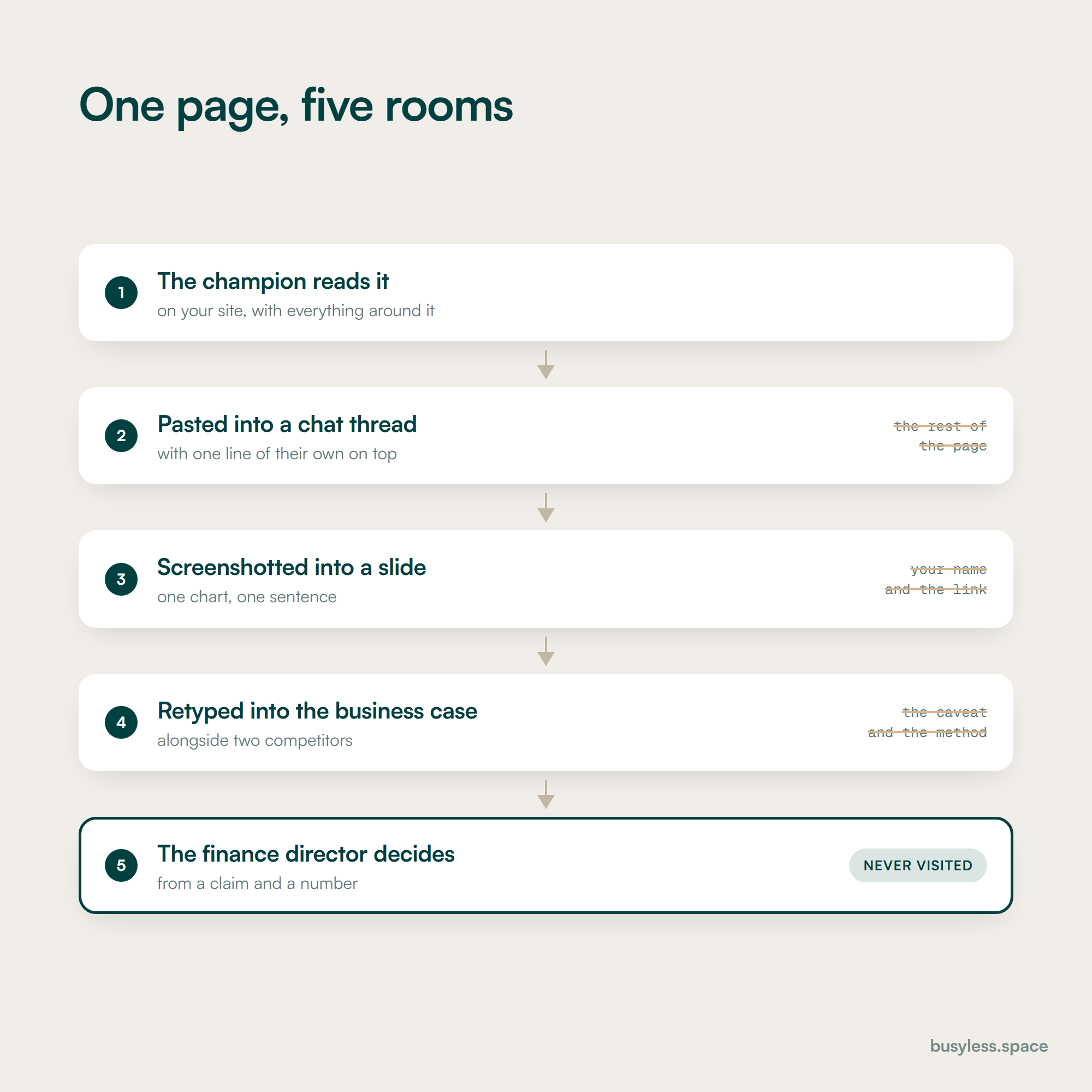
The test for everything below is whether it survives being forwarded. B2B content is read on a screen the author never sees, pasted into a document by somebody building a case for a person who will never visit your site.
The trust page
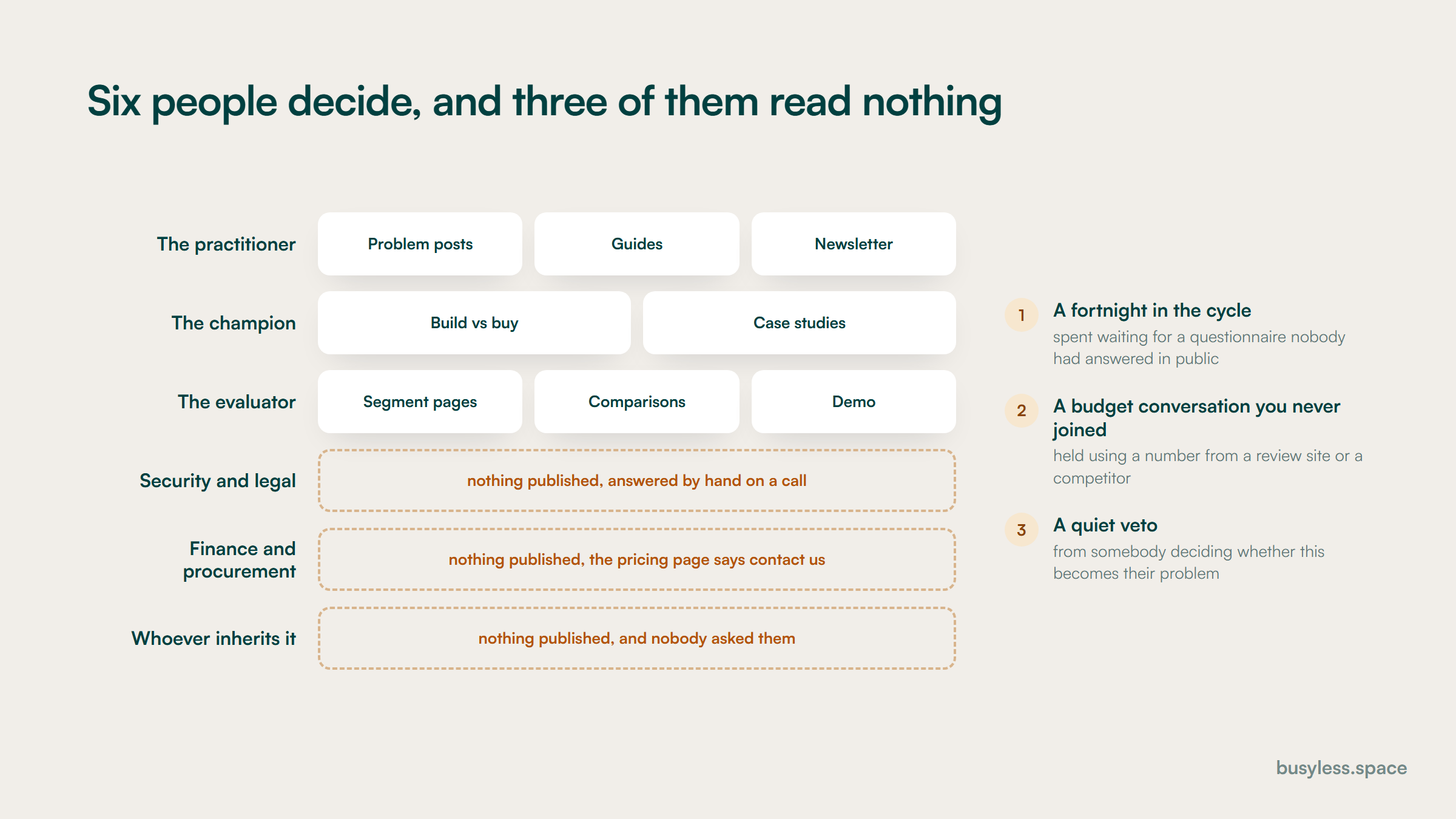
Once, then reviewed whenever a certification or a sub-processor changesSecurity, certifications, sub-processors, data residency and a named contact, in public. It answers the fastest veto in the process and almost every competitor keeps it behind an NDA.
A real pricing page
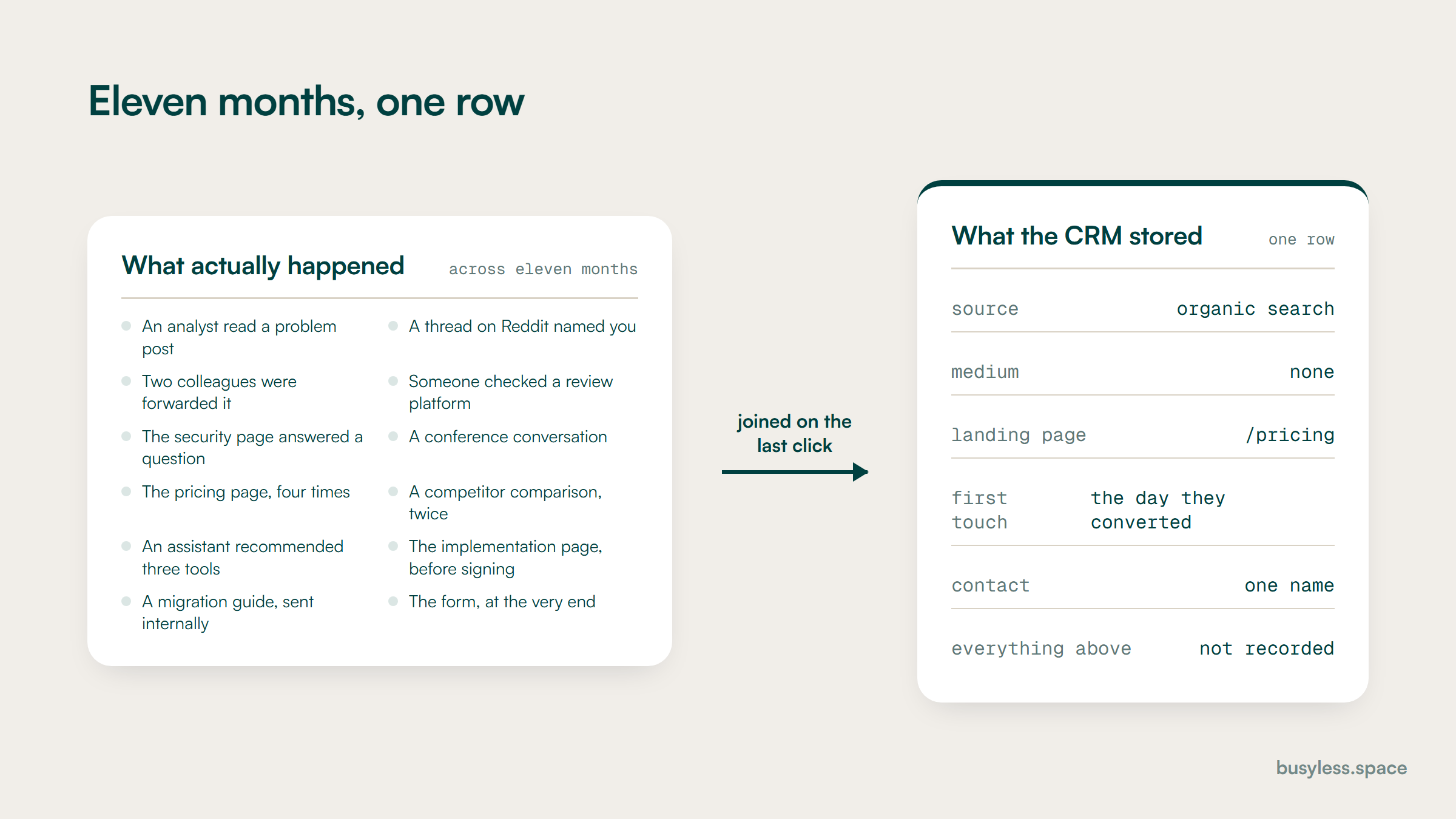
Once, reviewed each time the commercial model changesThe query runs whether or not you answer it. Publishing the model and the variables beats leaving a review site or a forum to publish a number on your behalf.
The honest comparison page
One per serious competitor, revised twice a yearYour competitors already publish one about you. A version that concedes two things they do better is the only kind that gets believed, and it is the one a champion is willing to forward.
The implementation page
Once, updated when the delivery model changesIt answers the quietest veto: the person who will inherit the work asking whether this becomes their problem. Real durations, real staffing and the failure modes.
Named customer stories with checkable numbers
One a quarter, which is realistic given approvalsAn identifiable company, an identifiable person and a number with the method attached. Everything else is a logo wall, which proves you had a customer once.
Problem-level content for the practitioner
Continuous, and judged over years rather than quartersIt reaches somebody before they know the category exists, converts to nothing measurable, and is the reason you are already trusted when the evaluation starts.
Business-case material built to be forwarded
One per primary use caseThe only asset whose reader is not the audience. It gets pasted into a deck, so every number needs a source and nothing can depend on the surrounding page.
And what not to
- Twelve industry pages that differ only by the noun. They read as filler and they are the exact shape search engines treat as scaled content.
- Ungrounded thought leadership about the future of the category. It reaches peers and competitors, and no member of a buying committee has ever forwarded one.
- Gated benchmark reports. The gate collects a few hundred addresses and forfeits every reader who would have cited it.
- Anonymised case studies. "A leading provider in the sector" is not proof and is not content, and it is usually anonymous because nobody asked twice.
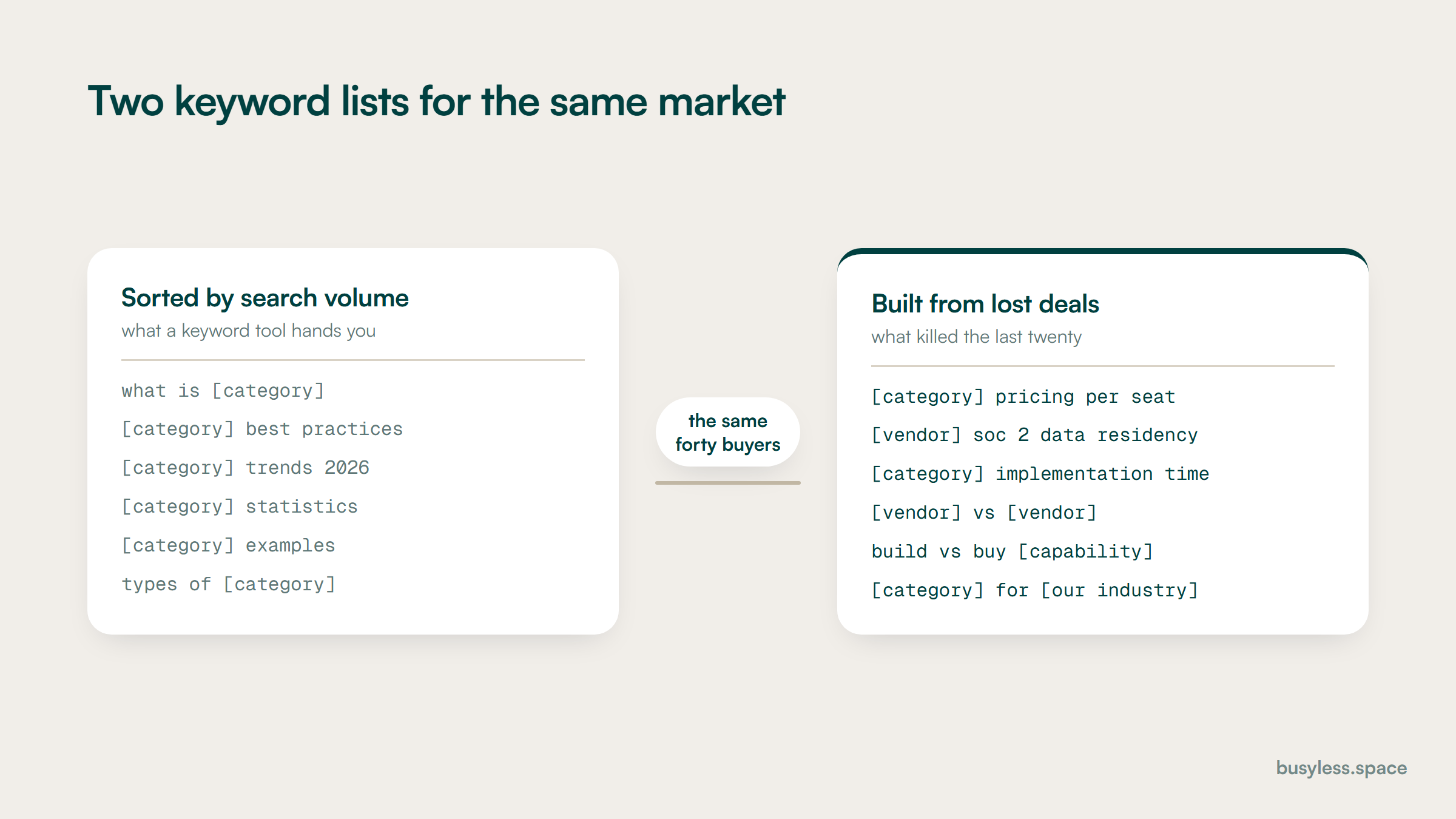
- Chasing the bare category head term with a product page. The review platforms have owned it for years and a vendor page is the wrong result for that query anyway.