
Content marketing for hotels
You have to market a place you do not own
- Sector
- Lifestyle and leisure
- Channels
- Video, Founder-led social, Search
- Buying cycle
- Short cycle
- Time to compound
- 6 to 12 months
- Typical monthly
- $2,000 to $12,000
Key takeaways
- 1Nobody chooses a city because of a hotel. The place is decided first and the property second, which means the majority of your useful content is about restaurants, walks, neighbourhoods and views that belong to somebody else.
- 2That is uncomfortable and it is also the opportunity. Almost every hotel publishes about itself, so the property that publishes genuinely well about the destination is competing in a category the chains have largely vacated.
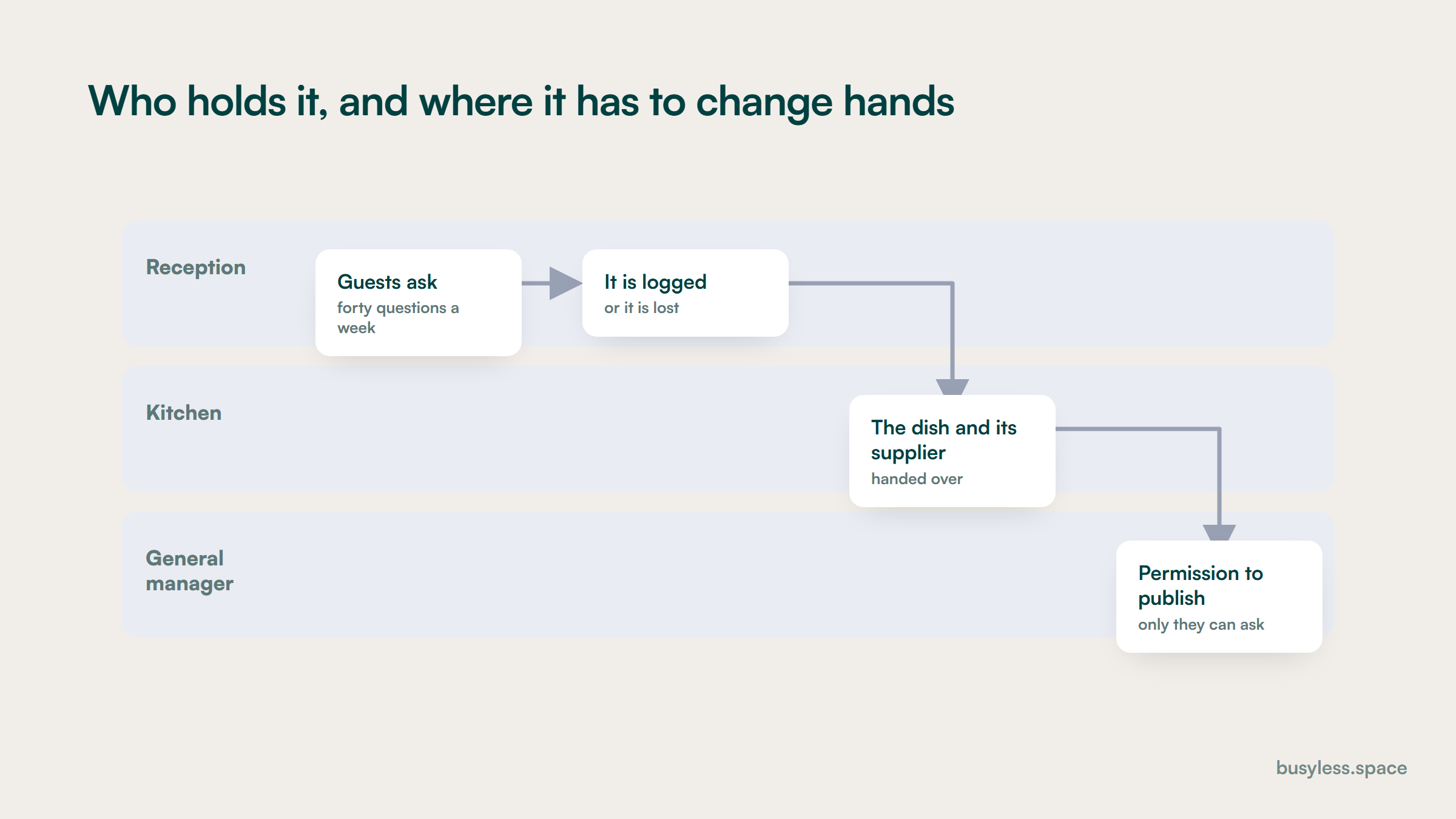
- 3The front desk answers the same forty questions every week and nobody writes any of them down. That log is the most valuable content asset in the building and it costs nothing but a clipboard to start.
- 4Your best assets contain other people's faces, other people's businesses and somebody else's music. None of those are search problems, they are permission problems, and they are the four rules on this page.
- 5The stay is the only part of the journey that happens on your property, and it is where almost no content is made. Everything a guest sees, eats and asks about during it is next year's dreaming and planning material.
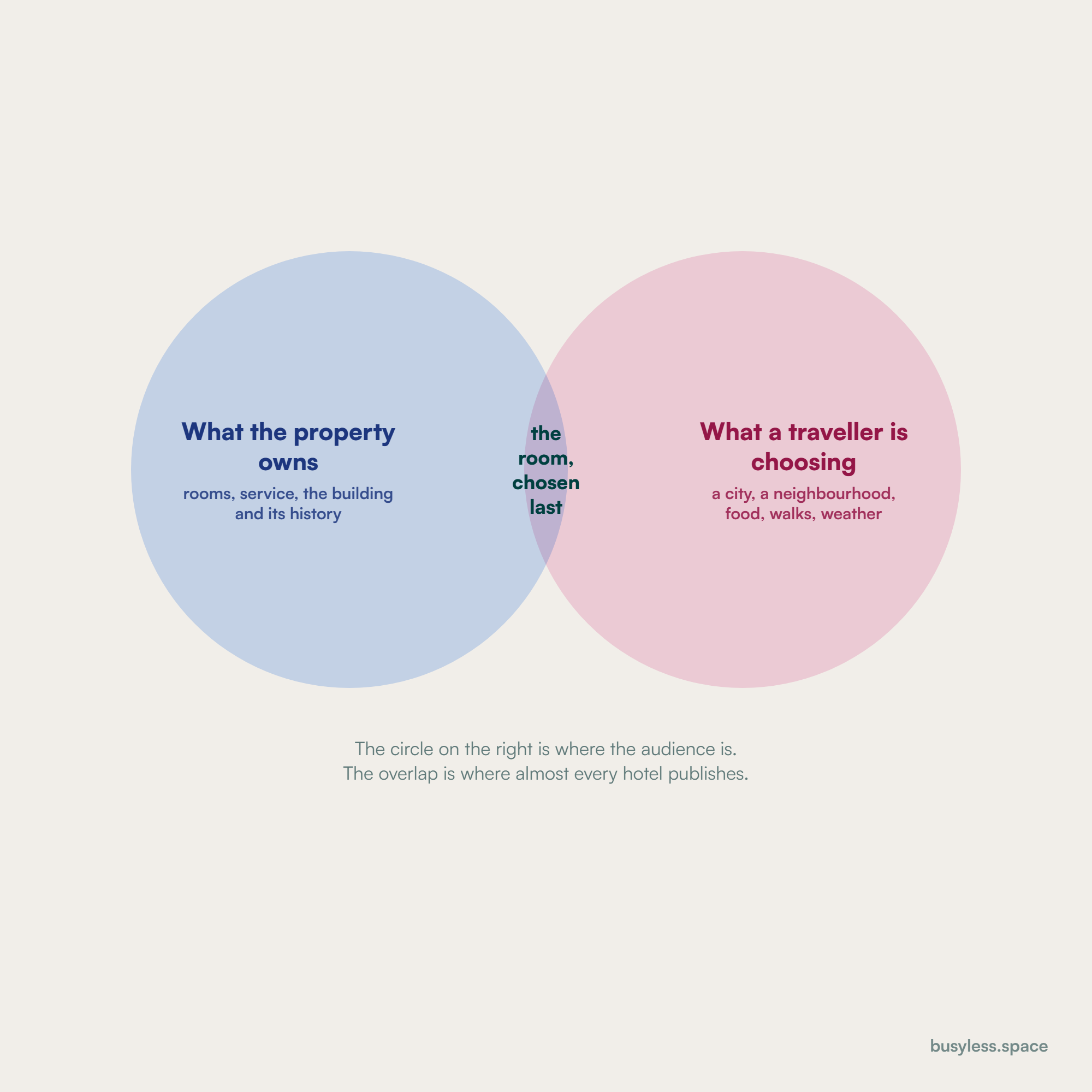
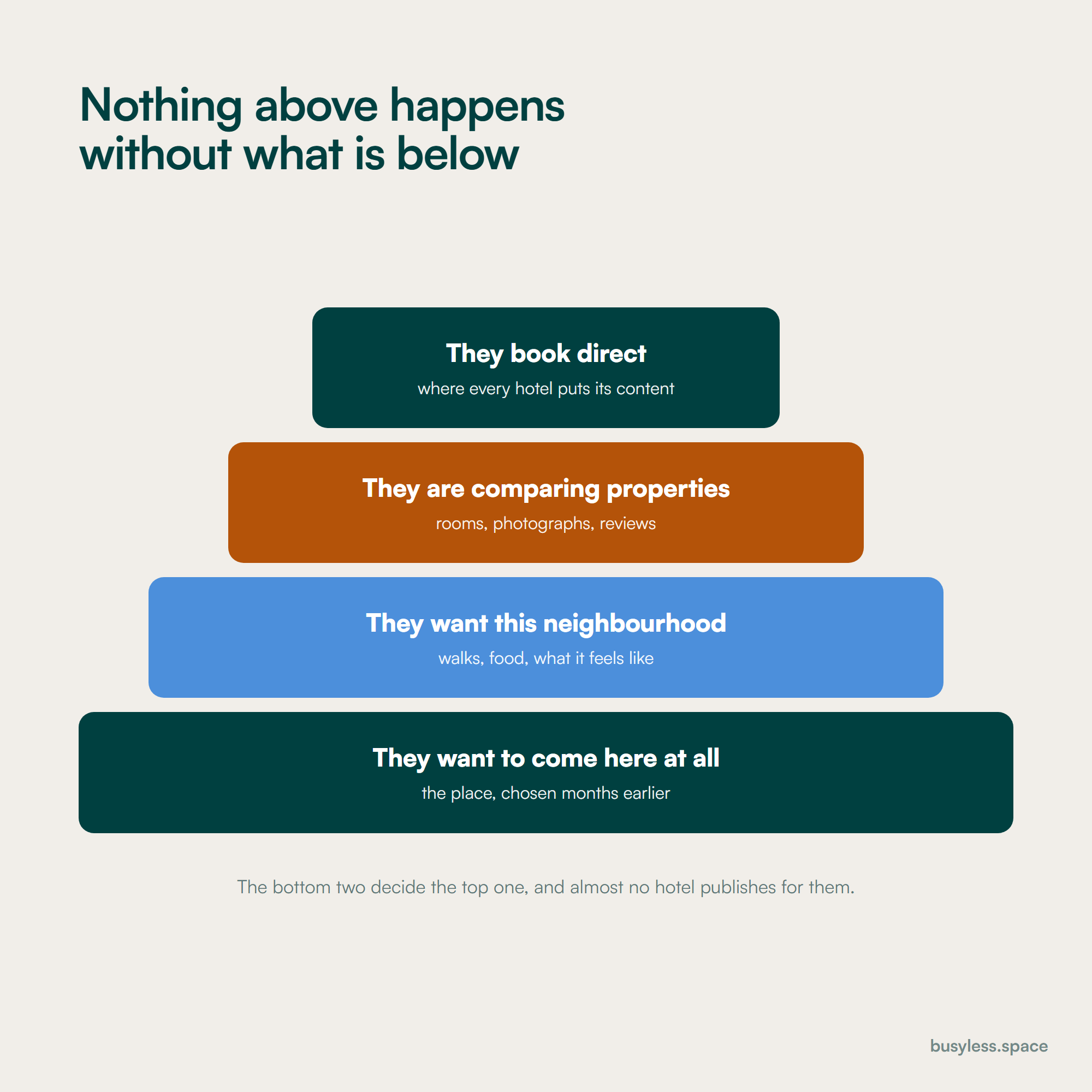
Content marketing for hotels has an awkward fact at the centre of it. Nobody decides to visit a city because of a hotel. The destination is chosen first, often months earlier and for reasons that have nothing to do with accommodation, and only then does anybody start comparing places to sleep.
That means the content a traveller actually wants is about the place. Where to eat on a Tuesday when the good restaurants are closed, which walk is worth the early start, which neighbourhood is quiet, whether the famous thing is worth queueing for. Almost none of that is about your property and almost all of it is what a guest is searching for.
Hotels find this uncomfortable and publish about themselves instead: the refurbished lobby, the new suite category, the spa. Those pages are read by people who have already decided to come, which is a real audience and a very small one compared with everybody still deciding where to go.
So a hotel content marketing strategy is mostly a decision to be useful about somewhere you do not own. It brings a set of permission problems that the rules section deals with, and it is the only version of this that reaches a traveller before the shortlist of properties exists.
Looking for the search half
This page decides which channels to run. The one next door goes deep on just one of them.
Which channels to run, and which to skip
Judged on whether the channel reaches somebody who has not yet chosen a property, because that is the audience the destination content is for. A channel that only works on people already comparing rooms is a conversion tool rather than a content channel.
Run these
Video
RunPlaces are visual and a room is not persuasive in text. Video also solves the destination problem better than any other format, because a two-minute walk through a neighbourhood shows a traveller something a description cannot, and it does not require them to already know your name.
First moveFilm one walk from your front door to somewhere worth going, in real time and without a voiceover. It is the most requested and least made asset in this industry.
Founder-led social
RunWhere the dreaming stage happens, and where a place is chosen. It rewards content about the destination far more than content about a property, which is exactly the shift this page argues for, so the channel and the strategy point in the same direction for once.
First movePost the destination material rather than the rooms for a month and compare. Most properties have never tested the two against each other.
Search
RunA traveller planning a trip searches constantly, and almost all of it is about the place rather than about hotels. That demand is enormous, largely served by publishers who have never been there, and reachable by anybody who actually lives in the city. The booking economics of search sit on the sibling playbook.
First moveAnswer the questions your front desk gets asked, which is a list of things people search for with local intent and genuine urgency.
Worth a test, with a kill date
Newsletter
TestNobody subscribes to a hotel they have not visited, and past guests are a genuinely valuable list where the property is somewhere people return to. Whether that is true of you is a question about your property rather than about the channel, and the booking data answers it.
First moveCheck what share of stays are repeat before building anything. Below about a tenth, this is a smaller opportunity than it looks.
Events and talks
TestWeddings, conferences and private hire are a separate business with a separate buyer and a much longer cycle, and content for them looks nothing like destination content. Worth running properly where that revenue matters and worth not pretending it shares a plan with leisure.
First moveDecide whether events are a real revenue line or an occasional extra. If they are real, they need their own plan rather than a page.
Community
TestNot a travel forum, where a hotel posting is unwelcome and usually removed. The real version is the network of businesses you already feature: the restaurants, guides and shops you send guests to, who have audiences of their own and every reason to reciprocate.
First moveAsk three businesses you already recommend whether they would work on something together. No other reach available to a hotel costs so little.
Skip these
Trade press
SkipHospitality publications reach operators, suppliers, investors and recruiters. That is a real audience for hiring and for reputation among peers, and none of them books a room, so it belongs to whichever budget is trying to reach the industry rather than to this one.
Original research
SkipOccupancy and rate data is genuinely interesting to the industry and irrelevant to a traveller choosing a weekend. There is a version that works, which is data about the destination rather than about hotels, and by the time you are doing that properly you are running a different kind of publication.
Three channels that reach somebody before the property shortlist exists, and the mix is unusual for this directory in leading with video. The two skips are both aimed at the industry rather than at the guest, which is the mistake this sector makes most often with its marketing budget.
What you already own that nobody can copy
The knowledge that makes a hotel worth reading is held by people on shift, and it is currently transmitted verbally, forty times a week, to the small number of guests who happen to ask. Almost none of it is written down anywhere.
The forty questions the front desk answers every week
Held by Reception and concierge
Real questions from real travellers about a specific place, answered by people who live there. A publisher writing a city guide from another country cannot produce this, and it is the exact set of things a traveller is searching for the week before they arrive.
How to capture it
Put a clipboard on the desk and log every question for two weeks. Nothing else in this playbook costs so little and tells you so much, and the list is almost always surprising.
What staff actually do on a day off
Held by Everybody who works there and lives locally
The difference between a recommendation and a listing. Where the kitchen team eats after a shift is information no guidebook has, and it is the single most credible thing a hotel can publish about its own city.
How to capture it
Ask one question at handover and write down the answer. Attribute it to the person by name and role, with their agreement, because that is what makes it convincing.
What your own booking data says about the place
Held by Revenue management
How long people stay, which months they come, how far ahead they book, what the weather does to all of it. It describes real travel behaviour in your destination rather than an industry average, and nobody outside the property has it.
How to capture it
Pull length of stay and booking lead time by month for two years. It tells you what to publish and when, and it occasionally makes a story of its own.
The building and what happened in it
Held by The owner, the long-serving staff, local archives
The one thing on this list that genuinely is yours. Most older properties have a real history nobody has written down, and it is the material that makes a place worth choosing over an identical room down the street.
How to capture it
Interview the longest-serving member of staff and check what they say against the local archive. Both halves are necessary and the second one is usually free.
What the kitchen makes and why
Held by The chef and the kitchen team
A dish tied to a place, a supplier twenty minutes away, a technique that came from somewhere. Food is the most shared content in travel and most hotel restaurants publish a menu as a downloadable file and nothing else.
How to capture it
Get one recipe written down properly, with the supplier named. A recipe is the rare hotel asset that travels far beyond people planning a trip.
Who actually makes it
Hospitality staffing is seasonal, turnover is high, and the person responsible for marketing is usually also selling groups, managing the website and answering reviews. Any plan that assumes a stable team available in August is a plan for a different industry.
Whoever owns marketing
Everything, alongside two other jobs
Frequently also handling groups enquiries, review responses and the website. In peak season this role effectively disappears, which is why the plan below front-loads production into the quiet months.
Half a role, in a good month
Front desk and concierge
The questions and the answers
Logging rather than writing. A clipboard on the desk produces more usable content per hour than anything else in the building and asks almost nothing of people who are already busy.
1 hour
The chef or kitchen lead
Food, suppliers and the recipes
The most reliably interesting contributor in a hotel and the hardest to schedule. Book them in the morning of a quiet day and record rather than asking for anything written.
2 hours
Somebody who can film and edit
The destination footage
Often a member of staff who already does this for themselves. Where it is contracted, buy days in the quiet season and bank the footage, because in August nobody has time to shoot anything.
6 to 10 hours
General manager
Permissions, partnerships and the building's story
The person who can ask a neighbouring restaurant to collaborate and who signs off anything involving a guest's image. Both are short tasks that only they can do.
2 hours
The honest cadenceOne substantial destination piece a month, one filmed walk a month, and a weekly clip, which is roughly twelve hours across the team. The realistic pattern is producing two months ahead in the quiet season, because in peak season this output is not achievable and pretending otherwise breaks the habit.
One project, 8 surfaces
One filmed afternoon in your own neighbourhood becomes eight things, and the ratio is unusually good here because the same footage serves the dreaming stage, the planning stage and the guest who has already arrived. Most content marketing ideas for hotels die because nobody planned the second use before filming the first.
- 1
The neighbourhood walk
3 hoursFrom: The footage, uncut
Real time, front door to destination, no voiceover. It answers the question a traveller cannot ask a booking site, which is what it actually feels like to walk out of the building.
- 2
The written guide
3 hoursFrom: What the walk passes
The durable search asset and the one that keeps working between seasons. Write it about the street rather than about the hotel that happens to be on it.
- 3
Short vertical cuts
90 minutesFrom: The three best moments
For the dreaming stage, where a place is chosen. Disposable by design, and the effort belongs to the durable assets rather than here.
- 4
The in-room card
1 hourFrom: The same recommendations, printed
A few pounds of card stock, and it closes the loop, because a guest who used it will photograph the place you sent them to.
- 5
The answer to a front-desk question
45 minutesFrom: Whatever the walk actually settles
Written from the log, in the guest's own phrasing. These accumulate into the most useful section of a hotel site and each one takes under an hour.
- 6
A partner post
30 minutesFrom: The businesses the walk features
Send it to them before you publish. A restaurant with an audience will usually share something that features it, and that reach costs nothing.
- 7
The pre-arrival email
30 minutesFrom: The two things worth booking ahead
Sent a week before the stay, useful rather than promotional. It reduces front-desk load and it is the point at which a guest starts planning what they will do.
- 8
The itinerary
2 hoursFrom: Several walks combined
A two-day plan somebody can follow. It is the asset most likely to be saved and forwarded, and it is what the structured data block further down is for.
The buying cycle, and what content does at each stage
Four of the five stages happen somewhere else entirely, and only one of them happens on your property. That is the shape of the whole page: the property is where the money is collected and almost nowhere else in the journey.
Dreaming
Weeks to a year"Where should we go?"
- What moves them
- Destination content, and video most of all
- How you know
- Reach and saves on place-led content, which is the only vanity metric worth watching here
Planning
Days to weeks"What is it actually like there?"
- What moves them
- The neighbourhood guide, the walk, the front-desk answers
- How you know
- Planning-stage reading by people who are not local, filtered by location
Choosing a property
Hours to days"Which one, and can I trust the pictures?"
- What moves them
- Honest photography, the building's story, real reviews
- How you know
- Brand searches and direct traffic, with the booking economics on the sibling playbook
The stay
1 to 5 nights"What should we do today?"
- What moves them
- The in-room card, the pre-arrival email, the front desk
- How you know
- Guests photographing the places you sent them, which becomes next year's content
Afterwards
Months to years"Would we go back, and who would we tell?"
- What moves them
- Reviews, the past-guest list, whatever they told their friends
- How you know
- Repeat stays and referred bookings, which is the slowest and truest number here
What you are allowed to publish
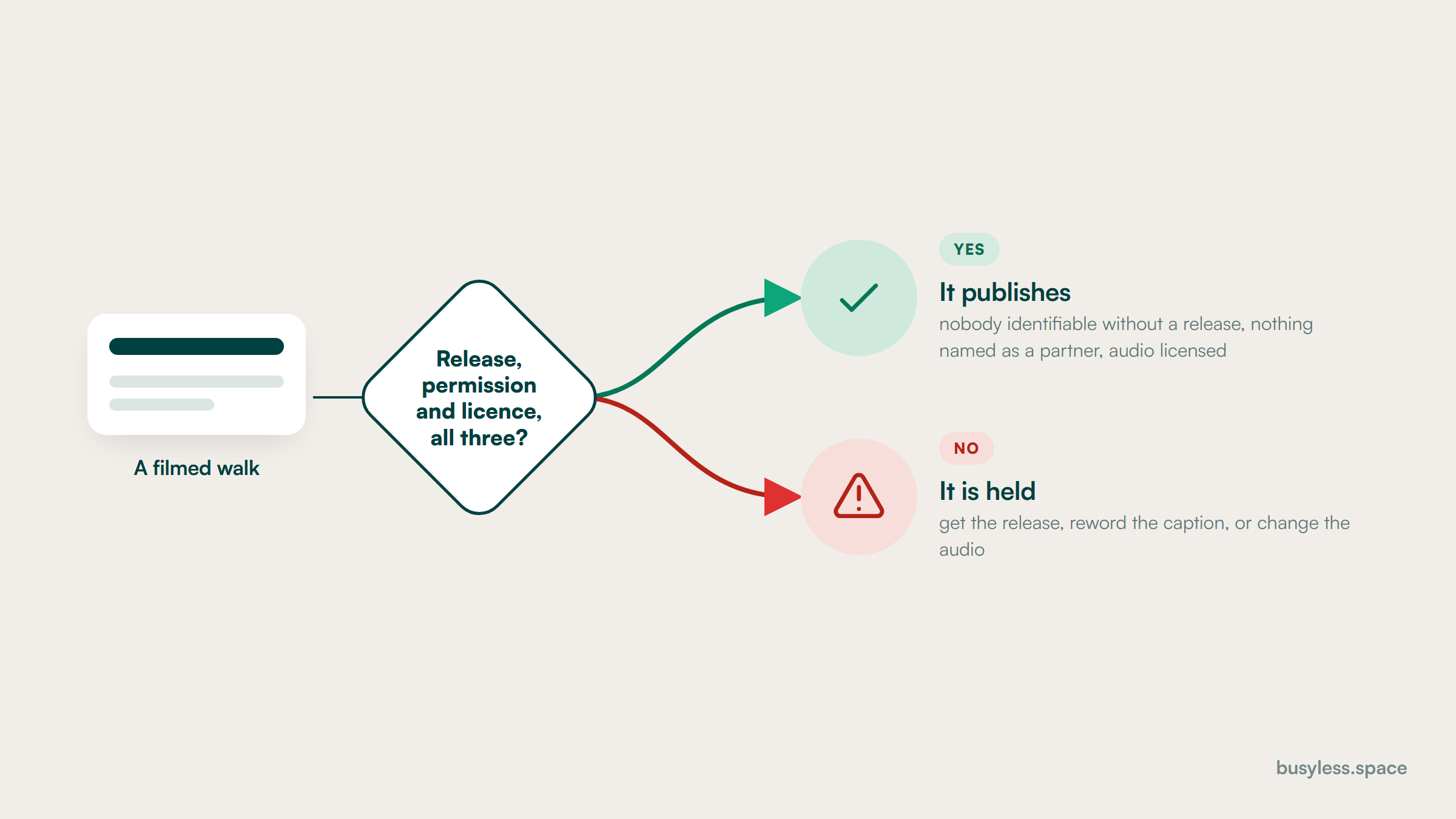
None of these four comes from a hospitality regulator. Everything on this page is ordinary advertising law plus two questions about permission, which is exactly why this playbook is classified differently from its search sibling. That sibling covers total-price display, state fee statutes, accessible-feature descriptions and rate parity, so none of those four appear here.
A free stay has to be disclosed by the person who received it
FTC Endorsement Guides, 16 CFR Part 255, revised June 2023, read 2026-08-30
A free or discounted stay is a material connection between the advertiser and the endorser, and it has to be disclosed clearly and conspicuously in the endorsement itself rather than in a profile or a linked page. The advertiser is responsible for what its endorsers say, and for having a reasonable programme to check that disclosures are actually being made.
So do thisPut the disclosure requirement in the written agreement before the stay, specify where in the post it has to appear, and check afterwards rather than assuming. Our startups and higher-education playbooks cover the same guides applied to employees and to third-party recruiters.
A guest's face is not yours to publish
State right of publicity statutes, including New York Civil Rights Law sections 50 and 51, read 2026-08-30
Using a living person's name, portrait or picture for advertising or trade purposes without written consent is actionable in a number of states, and hospitality generates these images constantly: the couple at breakfast, the family in the pool, the wedding party in the lobby. It applies to staff as well as guests, including former staff.
So do thisGet a written release for anybody identifiable in anything you publish, keep it with the file, and brief photographers before a shoot rather than culling afterwards. Our dtc-ecommerce playbook covers the separate question of who owns the photograph itself.
The music in your video is a licence question
Platform music terms for business accounts, and public performance licensing, read 2026-08-30
Social platforms generally restrict business and professional accounts to a commercial-use library rather than the full catalogue, and a track available to a personal account may not be available to yours. Separately, playing recorded music in public areas of the property is a public performance question handled through the relevant licensing bodies, which is a different obligation from the one attached to your video.
So do thisUse the commercial library, or licence the track properly, and remember that a video removed for audio takes its comments and shares with it. Keep the licence reference with the video file so a reupload is not a fresh decision.
You may describe a place you do not own, but not imply it is yours
Lanham Act section 43(a) false association principles, read 2026-08-30
Naming a nearby restaurant, museum or landmark descriptively is ordinary and permitted. Suggesting an affiliation, partnership or endorsement that does not exist is a different claim, and words such as official, partner and exclusive carry more weight than people assume. Distance and access claims are factual claims and are frequently wrong.
So do thisDescribe rather than affiliate, avoid official and partner unless there is an agreement, and check every walking-time claim against an actual walk. Ask before featuring a small business prominently, because the goodwill is worth more than the permission is.
None of this is legal advice. Rules vary by state and by contract, and the dates above are when each source was read. Check your own before you rely on any of it.
How to build content marketing for hotels
Half a year, and the sequencing is dictated by the season rather than by the work. Production is front-loaded into the quiet months because in peak season the team that makes this simply does not exist, and a plan that ignores that stops in July.
Find out what guests actually ask
- Put a clipboard on the front desk and log every question for two weeks
- Ask staff where they go on a day off and write it down
- Read two years of stays for their seasonal shape
- List every business you already send guests to
Output A question log, a staff list and two years of booking shape
Publish about the place
- Record one uncut walk out of the building
- Write the neighbourhood guide the walk supports
- Answer the ten most common front-desk questions
- Send the guide to the businesses it features before publishing
Output One film, one guide and ten answers, all about the destination
Settle the permissions before the season
- Write the release process for anybody identifiable in an image
- Move video audio onto the commercial library and record licences
- Put disclosure terms into every hosted stay agreement
- Check every distance and access claim against a real walk
Output A permissions process that works during a busy summer
Close the loop through the stay
- Print the in-room card from the same recommendations
- Build the pre-arrival email around what is worth booking ahead
- Publish one itinerary somebody could actually follow
- Report destination traffic from outside your city, not total sessions
Output A loop from dreaming to the stay and back into next year's material
Structured data for what you publish
The property, its rooms and its rates are marked up on the sibling playbook, which is where the accommodation entity belongs. These six describe what you publish about the place, and two of them are types this industry almost never uses.
TouristTrip for an itinerary you publish
A page carrying a two-day or three-day plan somebody could followThe type that fits the asset most likely to be saved and forwarded, and almost nothing in hospitality uses it. Describe a real itinerary with real timings rather than a list of attractions, because the value is the sequencing and that is what the markup carries.
{
  "@context": "https://schema.org",
  "@type": "TouristTrip",
  "name": "[ITINERARY NAME, e.g. Two days in [AREA] on foot]",
  "description": "[WHO IT SUITS AND WHAT IT ASSUMES]",
  "url": "https://[YOUR-DOMAIN]/guides/[SLUG]",
  "touristType": "[e.g. First-time visitors travelling without a car]",
  "itinerary": {
    "@type": "ItemList",
    "numberOfItems": "[N]",
    "itemListElement": [
      {
        "@type": "ListItem",
        "position": 1,
        "item": {
          "@type": "TouristAttraction",
          "name": "[PLACE, WHICH YOU DO NOT OWN]",
          "description": "[WHY IT IS WORTH THE TIME, AND WHEN TO GO]"
        }
      }
    ]
  },
  "provider": {
    "@type": "Organization",
    "name": "[PROPERTY NAME]",
    "url": "https://[YOUR-DOMAIN]"
  }
}
VideoObject for a neighbourhood walk
The page the film belongs on, not only the social platformName the route and the destination rather than the property, because that is what somebody is looking for at the dreaming stage. Keep the licence reference for the audio somewhere retrievable, since a reupload after a takedown should not be a fresh decision.
{
  "@context": "https://schema.org",
  "@type": "VideoObject",
  "name": "[THE ROUTE, e.g. From [AREA] to [PLACE], on foot]",
  "description": "[WHAT A VIEWER SEES AND HOW LONG IT TAKES]",
  "thumbnailUrl": "https://[YOUR-DOMAIN]/images/[FILE].jpg",
  "uploadDate": "[YYYY-MM-DD]",
  "duration": "PT[M]M[S]S",
  "contentUrl": "https://[YOUR-DOMAIN]/video/[FILE].mp4",
  "embedUrl": "https://[YOUR-DOMAIN]/[PAGE-SLUG]",
  "contentLocation": {
    "@type": "Place",
    "name": "[NEIGHBOURHOOD, CITY]"
  },
  "publisher": {
    "@type": "Organization",
    "name": "[PROPERTY NAME]",
    "url": "https://[YOUR-DOMAIN]"
  }
}
ImageObject with rights and consent recorded
Every published photograph containing a person or a place you do not ownThis block is where the two permission rules on this page become a habit. Record who took it, who is in it, whether a release exists and what the release covers, because a photograph library without that record becomes unusable the moment anybody asks.
{
  "@context": "https://schema.org",
  "@type": "ImageObject",
  "contentUrl": "https://[YOUR-DOMAIN]/images/[FILE].jpg",
  "caption": "[WHAT IT SHOWS AND WHERE]",
  "creditText": "[PHOTOGRAPHER]",
  "copyrightNotice": "(c) [YEAR] [RIGHTS HOLDER]",
  "license": "https://[YOUR-DOMAIN]/image-terms",
  "acquireLicensePage": "https://[YOUR-DOMAIN]/image-requests",
  "dateCreated": "[YYYY-MM-DD]",
  "contentLocation": {
    "@type": "Place",
    "name": "[PLACE, NAMED DESCRIPTIVELY, NOT AS A PARTNER]"
  }
}
ImageGallery for a place rather than a room
A gallery page about a neighbourhood, a season or a walkHotels build galleries of bedrooms and almost never of the place. A seasonal gallery of the same street across a year is one of the few assets that improves by existing for longer, and it is made from photographs staff take anyway.
{
  "@context": "https://schema.org",
  "@type": "ImageGallery",
  "name": "[AREA] through the year",
  "url": "https://[YOUR-DOMAIN]/gallery/[SLUG]",
  "description": "[WHAT IS SHOWN, PHOTOGRAPHED OVER WHAT PERIOD]",
  "image": [
    {
      "@type": "ImageObject",
      "contentUrl": "https://[YOUR-DOMAIN]/images/[FILE].jpg",
      "caption": "[PLACE AND MONTH]",
      "creditText": "[PHOTOGRAPHER]",
      "dateCreated": "[YYYY-MM-DD]"
    }
  ]
}
Recipe for something the kitchen makes
A page carrying one dish, properly writtenThe one asset a hotel can publish that travels far beyond people planning a trip, and it is almost always replaced by a downloadable menu. Name the supplier and the place the dish comes from, because that is what connects it back to the destination.
{
  "@context": "https://schema.org",
  "@type": "Recipe",
  "name": "[DISH NAME]",
  "description": "[WHERE IT COMES FROM AND WHY THE KITCHEN MAKES IT]",
  "url": "https://[YOUR-DOMAIN]/recipes/[SLUG]",
  "author": {
    "@type": "Person",
    "name": "[CHEF NAME]",
    "jobTitle": "[ROLE AT THE PROPERTY]"
  },
  "datePublished": "[YYYY-MM-DD]",
  "recipeYield": "[N servings]",
  "prepTime": "PT[N]M",
  "cookTime": "PT[N]M",
  "recipeIngredient": [
    "[QUANTITY AND INGREDIENT, NAMING THE LOCAL SUPPLIER WHERE IT MATTERS]"
  ],
  "recipeInstructions": [
    { "@type": "HowToStep", "text": "[STEP]" }
  ],
  "recipeCuisine": "[REGIONAL CUISINE]"
}
Article for the building's own history
The page telling the story of the property and its siteThe one topic on this page that genuinely belongs to you, so it is worth a real article rather than a paragraph on an about page. Cite the archive where you used one, because a checkable local history is more persuasive than an unattributed anecdote.
{
  "@context": "https://schema.org",
  "@type": "Article",
  "headline": "[WHAT THIS BUILDING WAS BEFORE]",
  "url": "https://[YOUR-DOMAIN]/about/[SLUG]",
  "description": "[THE PERIOD COVERED AND WHAT CHANGED]",
  "datePublished": "[YYYY-MM-DD]",
  "dateModified": "[YYYY-MM-DD]",
  "author": {
    "@type": "Person",
    "name": "[WHO RESEARCHED IT]"
  },
  "publisher": {
    "@type": "Organization",
    "name": "[PROPERTY NAME]",
    "url": "https://[YOUR-DOMAIN]"
  },
  "citation": "[LOCAL ARCHIVE, COLLECTION OR SOURCE]",
  "contentLocation": {
    "@type": "Place",
    "name": "[NEIGHBOURHOOD, CITY]"
  }
}
What to automate, and where the line is
The useful automation here is about coping with seasonality and with a room full of languages, rather than about writing. The line sits at the recommendation and at anything involving a guest, because both are places where being wrong is expensive in person.
- automate
Clustering front-desk questions into themes
A two-week log is a few hundred entries and the pattern is the publishing plan. Grouping them is mechanical and it is what turns a clipboard into a content calendar.
- automate
Reading booking data for seasonality and lead time
The data exists and nobody has time to read it. It tells you when to publish, which in a seasonal business decides most of the value, and the arithmetic is entirely routine.
- automate
Cutting short vertical versions from longer footage
High volume and disposable by design. Keep a person on the choice of moment, since the mechanical version consistently picks the visually loud one rather than the useful one.
- assist
Translating destination content into guest languages
Fast and mostly reliable, and a mistranslated walking direction sends somebody the wrong way in a foreign city. Have a native speaker check anything that gives instructions.
- assist
Drafting the neighbourhood guide from a filmed walk
Good at structure and it will produce the generic version of the city that already exists everywhere. The staff detail is the whole value and it has to be put back by somebody who lives there.
- assist
Drafting responses to reviews
Useful for the routine positive ones and consistently wrong on the difficult ones, where an actual apology and a specific fact are what is required. A manager sends anything that is not straightforward.
- never
Inventing a recommendation for a place
The whole value of a hotel guide is that somebody who lives there checked. A confidently recommended restaurant that closed last year, or never existed, destroys the only advantage this content has.
- never
Generating imagery of rooms, views or the surroundings
A guest arriving to a room that does not match the picture is the oldest complaint in hospitality, and a generated view is that complaint with a worse explanation attached.
What it costs
Treat these as bands to sanity-check a proposal against, and note that every tier assumes the front desk logging habit is running, because everything else here is built from it. What moves the number most is how much of the destination you are covering, since a city is a bigger commitment than a neighbourhood.
Do it yourself
$0 to $700- The front-desk question log and ten answers from it
- One filmed walk a month, on a phone
- The in-room card, printed
- Staff recommendations written down and attributed
- Suits
- A small independent property with no marketing role
- Ceiling
- It stops entirely in peak season, which is when the destination content matters most. The pages already published keep working, which is the argument for producing them in winter.
Lean
$2,000 to $5,000- Somebody who films and edits, booked in the quiet months
- A neighbourhood guide series rather than single pages
- The permissions process actually running
- Partner collaborations with the businesses you feature
- Suits
- An independent property in a destination with real seasonality
- Ceiling
- It covers one neighbourhood properly. Covering a whole city means a different volume of material and a research problem rather than a production one.
Funded
$5,000 to $12,000- Continuous video rather than a burst in the quiet season
- Destination coverage broad enough to reach the dreaming stage
- Itineraries, recipes and the building's history done properly
- Events treated as its own plan rather than as a page
- Suits
- A group of properties, or a single hotel where the destination is the draw
- Ceiling
- The constraint becomes editorial judgement rather than money. A hotel publishing about a whole city is competing with publishers, and doing that badly is worse than covering three streets well.
Above this
$12,000 and up- Several properties and destinations under one editorial standard
- Local partnerships resourced as an ongoing programme
- Content produced in the languages your guests actually book in
- A photography and rights library maintained rather than accumulated
- Suits
- Groups where the destination is the reason people choose the brand
- Ceiling
- Consistency across destinations becomes the cost, and the failure mode is a central voice that makes every city sound the same, which removes the only advantage the content had.
How to do it with no budget
The first of these seven is the least expensive research a hotel can do. A clipboard on a desk for two weeks produces a publishing plan that a paid keyword exercise would take a month to approximate. The content marketing tips for hotels below are ordered by what pays back first.
- 1
Log every question the front desk is asked
A clipboard · Two weeks of noticing
Write the question in the guest's words, not the answer. The list is almost always surprising and it is the whole content plan.
- 2
Ask staff where they go on a day off
One question at handover · 30 minutes
Attribute it by name and role, with their agreement. An attributed recommendation from a person who works there is the most credible thing a hotel can publish.
- 3
Film one real-time walk from the front door
A phone and a quiet morning · 2 hours
No voiceover, no cuts, no music. It answers what a booking site cannot, which is what it feels like to step outside.
- 4
Pull length of stay and lead time by month
Your property management system · 1 hour
Two years is enough. It tells you when to publish for each audience, which in a seasonal business is most of the value.
- 5
Check every walking-time claim on your site
Your own feet · 2 hours
Walk them at the pace a guest with luggage would. A large share of these claims are wrong and each one is a small broken promise.
- 6
Ask three businesses you recommend to collaborate
A conversation · 1 hour
You already send them guests. A joint piece costs nothing and reaches an audience you would otherwise pay for.
- 7
Interview your longest-serving member of staff
A phone, and the local archive afterwards · 3 hours
The building's history is the only topic here that genuinely belongs to you. Check the anecdotes against the archive, which is usually free to search.
The tool stack
Very little software, because the two things that matter most are a clipboard and somebody who can film. The rows linking into our other directories go to the researched review rather than to a vendor page.
Hold the question log and the recommendation list
One row per question: what was asked, in whose words, and whether it has been answered on the site. It becomes the content calendar without anybody writing one.
Free option: No cost, and a spreadsheet genuinely beats software for this
Publish guides and itineraries outside the booking template
A neighbourhood guide, an itinerary and a recipe are three different shapes and most hotel websites are built to hold one, which is a room.
Free option: Your existing site, if it can hold a page that is not a room type
Keep the image rights and release record
One row per image: photographer, who is identifiable, whether a release exists and what it covers. Without it a library becomes unusable the moment somebody asks a question about one photograph.
Free option: A folder convention plus a spreadsheet, which works to a few thousand images
Model what a shift towards direct bookings is worth
Run it on destination traffic rather than on brand traffic. The booking economics themselves are the sibling playbook's subject and this is the content half of the same question.
Free option: Free
Price the programme before committing to a cadence
Model it against the quiet season rather than an even monthly spend. A plan priced as twelve equal months is a plan that will fail in July.
Free option: Free
See what travellers search about your destination
Use it beside the front-desk log rather than instead of it. The log has the questions with urgency attached and this tells you how many people are asking before they arrive.
Free option: The front-desk log, which is better and free
Check what assistants recommend in your destination
Increasingly where the dreaming stage happens. Answers lean heavily on large publishers and review platforms, which is worth knowing before assuming your guide is being read.
Free option: Ask each assistant where to stay and what to do in your area, monthly
Track music licences against published video
One row per video: the track, where it came from, and whether the licence covers a business account. A takedown removes the comments and shares with the video, so this is cheaper than it looks.
Free option: Free
Take it from here
Everything below is meant to be copied and filled in. Bodies are plain text, so what you see is exactly what lands on your clipboard.
Two weeks and a clipboard, for a publishing plan a paid exercise could not match. Their words, not your answers.
FRONT-DESK QUESTION LOG
Property: [PROPERTY NAME]
Started: [YYYY-MM-DD]      Ends: [YYYY-MM-DD]
Kept by: [RECEPTION TEAM]

HOW TO USE THIS
Every time a guest asks something, write the QUESTION.
Not the answer. Not a category. Their actual words.

Two weeks. Then stop and read it.

     [THE ANSWER IS ALREADY IN SOMEBODY'S HEAD. THE
      QUESTION IS THE THING NOBODY HAS EVER RECORDED.]

THE LOG
Date | Time | Question, verbatim | Asked by (couple,
family, business, solo) | Answered easily?

[ ] | [ ] | "[THEIR WORDS]" | [ ] | [Y/N]

WHAT TO CAPTURE THAT USUALLY GETS MISSED
[ ] Questions asked at check-in, which are different
    from questions asked on day two
[ ] Questions asked at breakfast
[ ] Questions phoned in before arrival
[ ] Questions asked by people who are not staying
[ ] The question somebody asks after you answer the
    first one
    [THE SECOND QUESTION IS USUALLY THE REAL ONE.]

AFTER TWO WEEKS, COUNT
Total questions logged:                    [N]
Distinct topics:                           [N]
Already answered on our website:           [N]
   Of those, why did they still ask?
   [ ] Not findable
   [ ] Out of date
   [ ] Answered generically
   [ ] They never looked

THE TOP TEN
 1. "[QUESTION]"   asked [N] times
 2. "[QUESTION]"   asked [N] times
 3. "[QUESTION]"   asked [N] times
     [THESE TEN ARE TEN PAGES, WITH DEMAND ALREADY
      PROVEN AND PHRASING ALREADY WRITTEN.]

WHAT SURPRISED US
[ ]
     [THERE IS ALWAYS SOMETHING. IT IS USUALLY THE
      THING THE WEBSITE ASSUMES EVERYBODY KNOWS.]

WHAT WE ARE WRITING, IN ORDER
1. [PAGE]  from question [N]  owner [NAME]
2. [PAGE]  from question [N]  owner [NAME]
3. [PAGE]  from question [N]  owner [NAME]

RE-RUN THIS: [YYYY-MM-DD]
[ONCE A SEASON. THE QUESTIONS CHANGE WITH THE
WEATHER AND WITH WHO IS TRAVELLING.]The expensive mistakes
Publishing about the property instead of the place
What it costs: Content read only by people who have already decided to come
Write about the destination and let the property appear in it. The audience still deciding where to go is many times larger than the one comparing rooms.
Letting the front-desk knowledge stay verbal
What it costs: Forty answers a week given away one guest at a time and written down never
Put a clipboard on the desk for two weeks. Two weeks of noticing produces a year of pages with demand already proven.
Filming everything in the two weeks before summer
What it costs: A production plan that collides with the busiest period and stops entirely
Bank footage in the quiet months and publish it through the season. The seasonality is known in advance, which makes this a scheduling decision rather than a resourcing one.
Publishing images of identifiable guests without a release
What it costs: A right of publicity problem, in an industry that photographs people constantly
Brief photographers before a shoot and keep the release with the file. Culling afterwards is slower and it always loses the best photograph.
Calling a nearby business a partner
What it costs: A false association claim over a relationship that was only ever a recommendation
Describe rather than affiliate, and keep official, partner and exclusive for arrangements that exist in writing. Naming a restaurant descriptively is ordinary and fine.
Trusting a walking-time claim nobody has walked
What it costs: A small broken promise on arrival, which is where reviews come from
Walk every route at the pace of a guest with a suitcase and correct the numbers. It takes an afternoon and it is one of the highest-value afternoons on this page.
What to measure
Measuring hotel content marketing against occupancy is the fastest way to prove nothing, because occupancy moves with season, rate, events and weather. What follows separates the destination half from the property half, and it is honest that the largest effect happens before anybody could be attributed.
Leading indicators
Sessions on destination pages from outside your city
Analytics, filtered by location
The one filter that matters, because local traffic on a neighbourhood guide is neighbours rather than travellers. It is the clearest sign the planning-stage content is reaching anybody.
Saves and shares on place-led content
The platforms themselves
The only vanity metric worth watching here, because saving something is what a person does at the dreaming stage. Compare place-led against property-led posts rather than tracking a total.
Front-desk questions already answered on the site
The question log
Runs the other way from most metrics: a rising share means the content is covering what guests actually ask. It also quietly reduces load on the desk.
Partner shares and reciprocal features
A folder, honestly
Reach you did not pay for, from businesses you already send guests to. Count the businesses rather than the impressions, because the relationships are the asset.
Business indicators
Brand searches for the property
Search console and analytics
Somebody searching your name has decided to consider you specifically, which is the bridge between destination content and a booking. The booking economics that follow are on the sibling playbook.
Direct bookings as a share of the total
Your property management system
Moved by many things other than content, so read it as a trend across a year rather than month to month. Put it beside the destination traffic figure rather than in a different report.
Repeat and referred stays
Your property management system
The slowest number here and the truest. It reflects what happened during the stay as much as anything published, which is why the in-room card and the pre-arrival email are on this page at all.
Review mentions of things you recommended
Your review platforms
A guest praising a restaurant you sent them to is content that worked, measured at the only point where the loop closes. Nobody counts this and it is the most satisfying number on the page.
The verdict
Content marketing for hotels asks a property to spend most of its effort on things it does not own. That feels wrong to almost every owner and it follows directly from how the decision is made: a place is chosen first, and a room is chosen afterwards from a shortlist you can only join by being visible earlier. Every content marketing strategy for hotels that works starts by accepting that.
The material is already in the building. The front desk answers the same questions every week, the kitchen has a story, the staff know where to eat, and the property has a history nobody has written down. None of it costs anything to collect and almost none of it is collected. Content marketing strategies for hotels fail on collection far more often than on writing.
Be wary of a proposal for hotel content marketing services that leads with room photography, or that never asks what the front desk gets asked. The first is content for people who already chose you, and the second is research this industry can have for the price of a clipboard.
In short, content marketing services for hotels are worth buying when the property will publish about somewhere other than itself and somebody has settled the permissions before the season starts. Without those two, you have bought a brochure with a slower delivery schedule.
FAQ
Hotel content marketing questions
Why would we publish about restaurants we do not own?
Because that is what a traveller is searching for while deciding where to go, and the property shortlist is formed afterwards. Almost every hotel publishes about itself, so being genuinely useful about the destination puts you in a category the chains have largely left empty.What is the one thing to start with if we have no budget?
A clipboard on the front desk for two weeks, logging every question a guest asks in their own words. It costs nothing, it produces a publishing plan with demand already proven, and the list is almost always surprising.Can we post a photo of guests enjoying the pool?
Not without a written release from anybody identifiable. Using a living person's picture for advertising without consent is actionable in a number of states, and it applies to staff as well as guests. Brief photographers before a shoot rather than culling images afterwards.Do we have to disclose a free stay we gave a creator?
Yes, and it has to appear clearly in the post itself rather than in a profile or a linked page. A free or discounted stay is a material connection, the advertiser is responsible for what its endorsers say, and you are expected to check rather than assume.Why does our video keep losing its audio?
Platforms generally restrict business accounts to a commercial-use music library, so a track a personal account can use may not be available to yours. Use the commercial library or licence the track, and keep the reference with the file, because a takedown removes the comments and shares too.When are we supposed to make any of this?
In the quiet season, publishing through the busy one. In peak months the person responsible for marketing is also handling groups, reviews and the website, and a plan that assumes twelve even months will stop in July. Bank the footage in winter.Is a newsletter worth it for a hotel?
Check what share of your stays are repeat before deciding. Where people return, a past-guest list is genuinely valuable; where they do not, nobody subscribes to a hotel they have never visited. The property management system answers this in about ten minutes.What should an independent property expect to spend?
The clipboard, the staff recommendations and the first filmed walk cost hours rather than money. Where a budget exists, an engagement begins with a Discovery and then a monthly retainer, and the realistic range for running it properly is $2,000 to $12,000 a month.Should we hire someone to write this, or do it ourselves?
Collect it yourselves, then decide. The clipboard on the front desk and the walk from your own door are not work anybody can be hired to do, because the knowledge is on shift and not in a brief. Buy marketing content for hotels once you have two months of real questions written down and know which ones repeat.
Run it yourself, or have someone own it
Everything above is written to be run without us, and the free path is genuinely most of the value for a small practice. Where these plans stall is almost never the plan. It is that the person holding the material has a day job and nobody owns the programme after the first month. That is the job we do.