What to publish
The ordering is how directly a page reaches somebody with a real project. Practices publish more images; the right enquiries come from the practical writing that surrounds them.
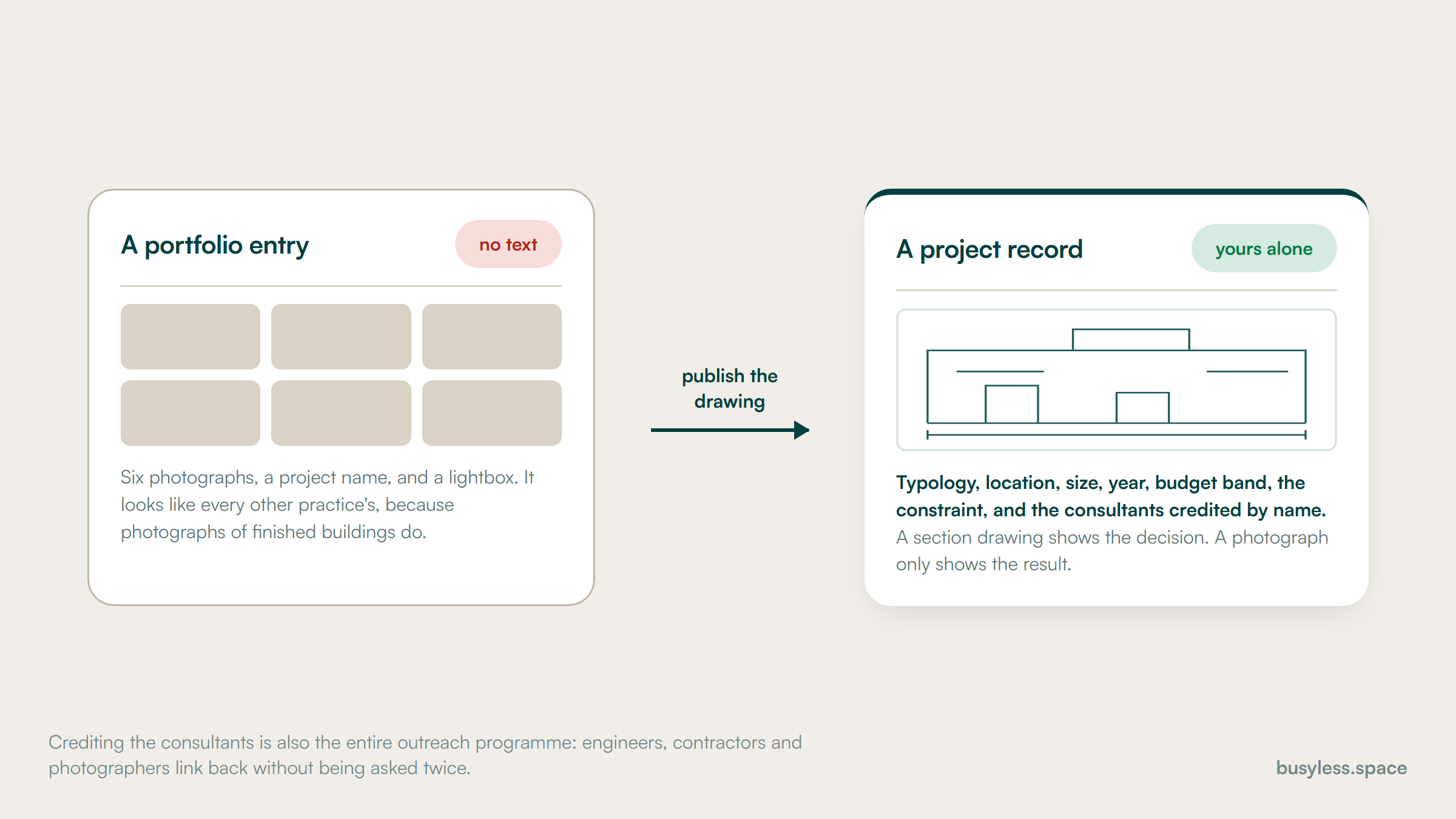
Project pages with drawings and credits
One per project, published as it completesThe proof asset, and the drawings are the part no competitor can replicate. Crediting consultants is also the most reliable link acquisition in the field.
Feasibility and code explainers
One per jurisdiction, re-checked yearlyHyper-local, changing, and read at the exact moment a project becomes real. The strongest content available to a residential practice.
The fees page
Once, reviewed yearlySearched constantly, answered almost nowhere, and the confusion between fee structures is itself the content.
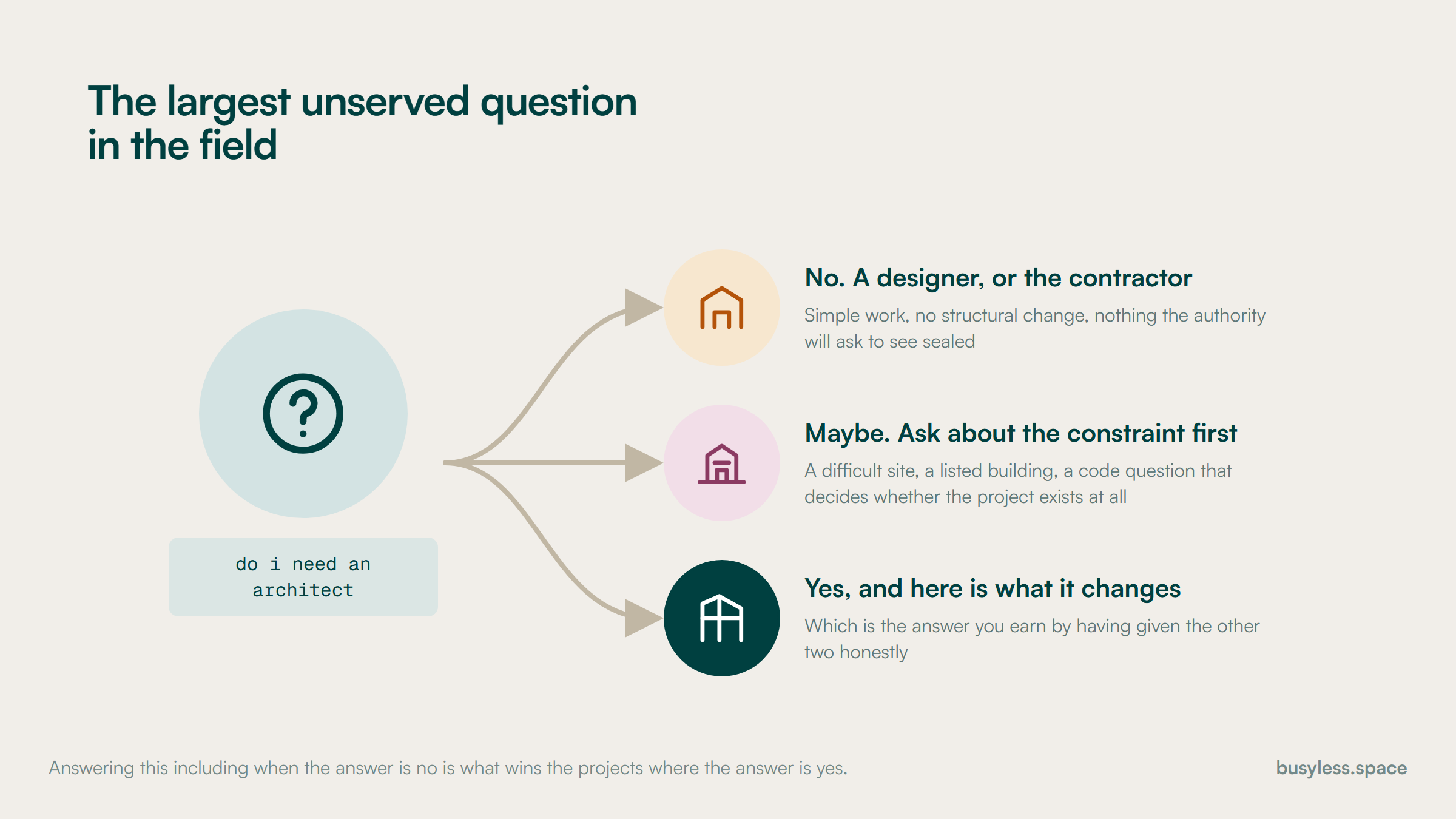
The do-I-need-an-architect guide
Once, properlyThe largest unserved cluster in the field. Answering it honestly, including when the answer is no, wins the ones who do.
Your own process, phase by phase
Once, updated when the practice changes how it worksAlmost nobody commissioning a building has done it before. A practice that publishes its own stages, with what each one produces and how long it takes, is answering the question everybody arrives with.
Typology and sector pages
One per typology you genuinely want more ofThe most qualified commercial queries, and only as good as the projects behind them. Somebody searching a typology has a project of that type.
And what not to
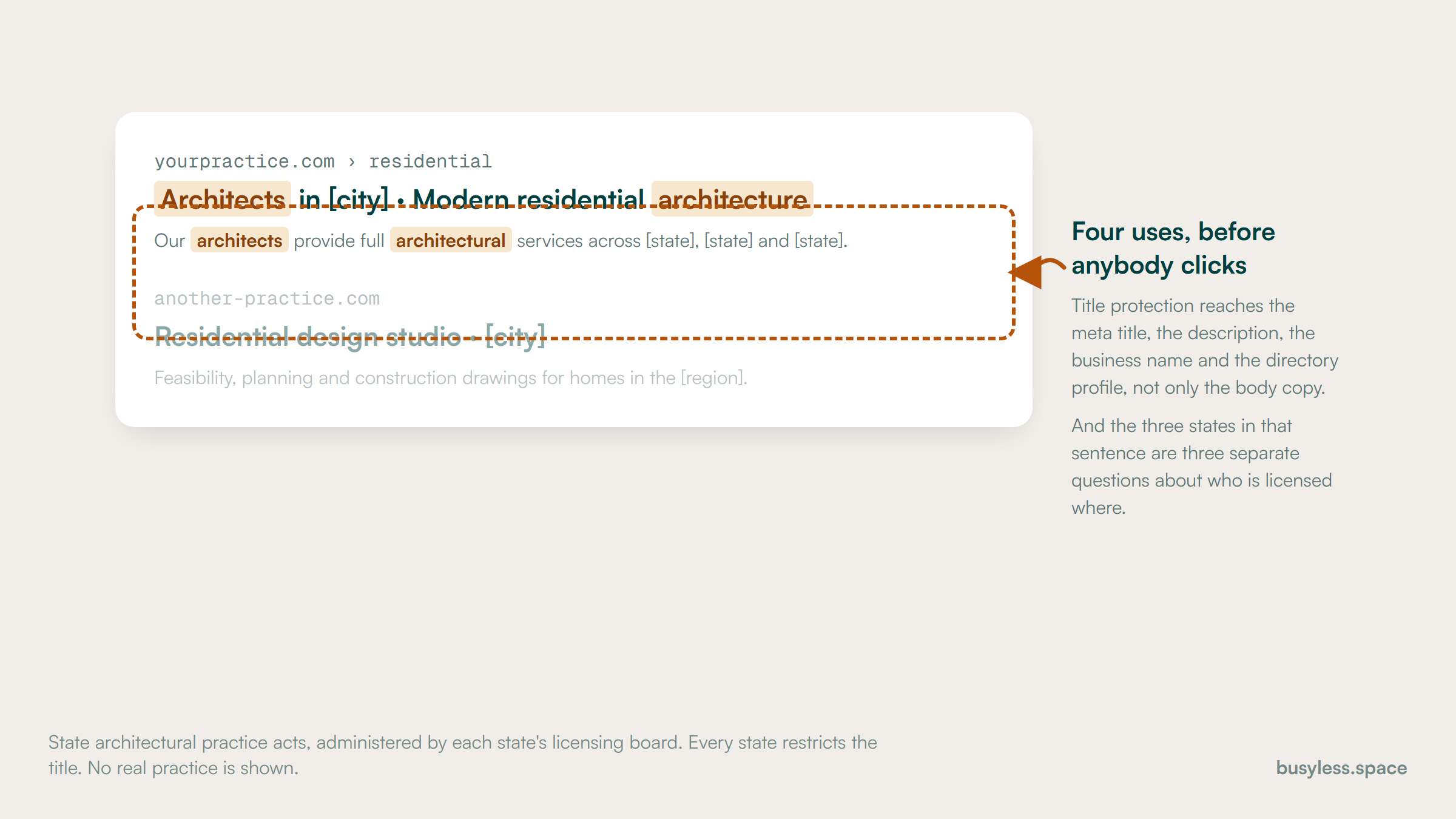
- Any use of architect or architectural that the licences behind it do not support
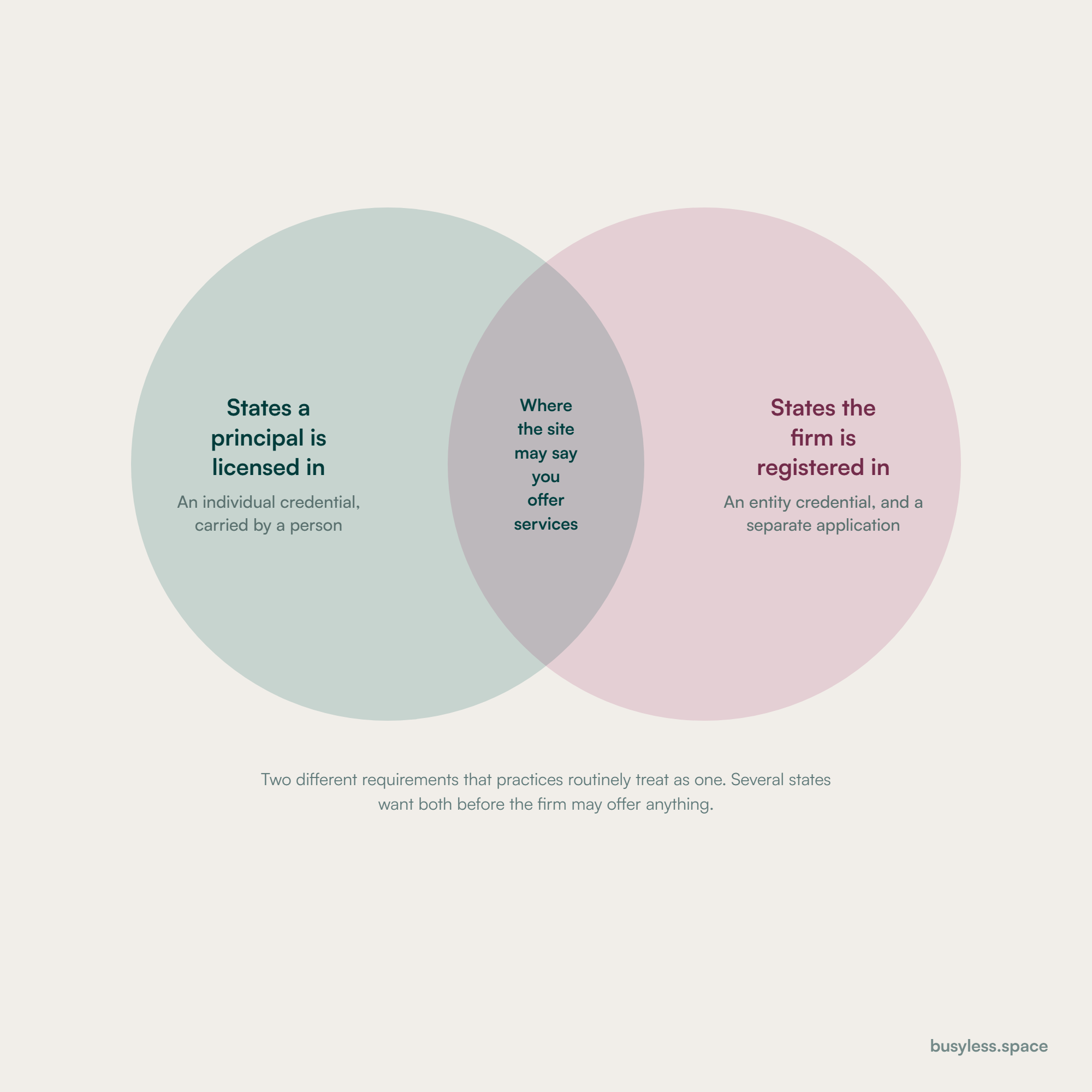
- Service-area pages for states where the firm is not registered
- Stamping, sealing or plan review advertised as a standalone product
- Prior-firm work presented as the practice's own
- Project pages with no typology, location, size, year or consultants named
- General architectural commentary written for peers rather than for clients
- Awards and publication logos with no link to the original