What to publish
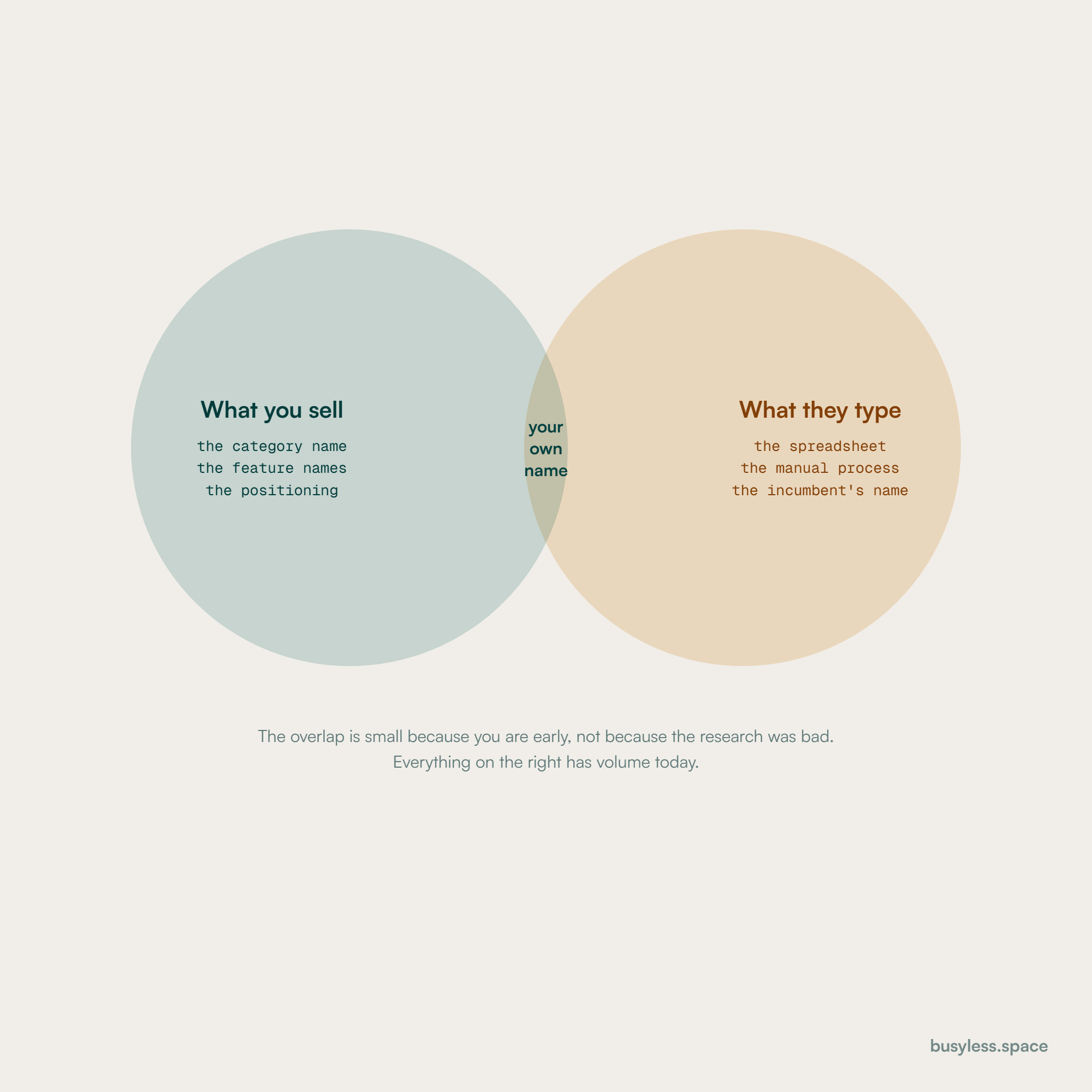
Everything below is written for somebody who has the problem and has never heard of you. That rules out most of what early companies publish, which is written for people who already follow the company.
The free template or tool
One, published early, then improvedIt reaches the person doing the job manually, at the moment they are frustrated by it, and it costs a weekend because you already built it for yourself.
The incumbent alternatives page
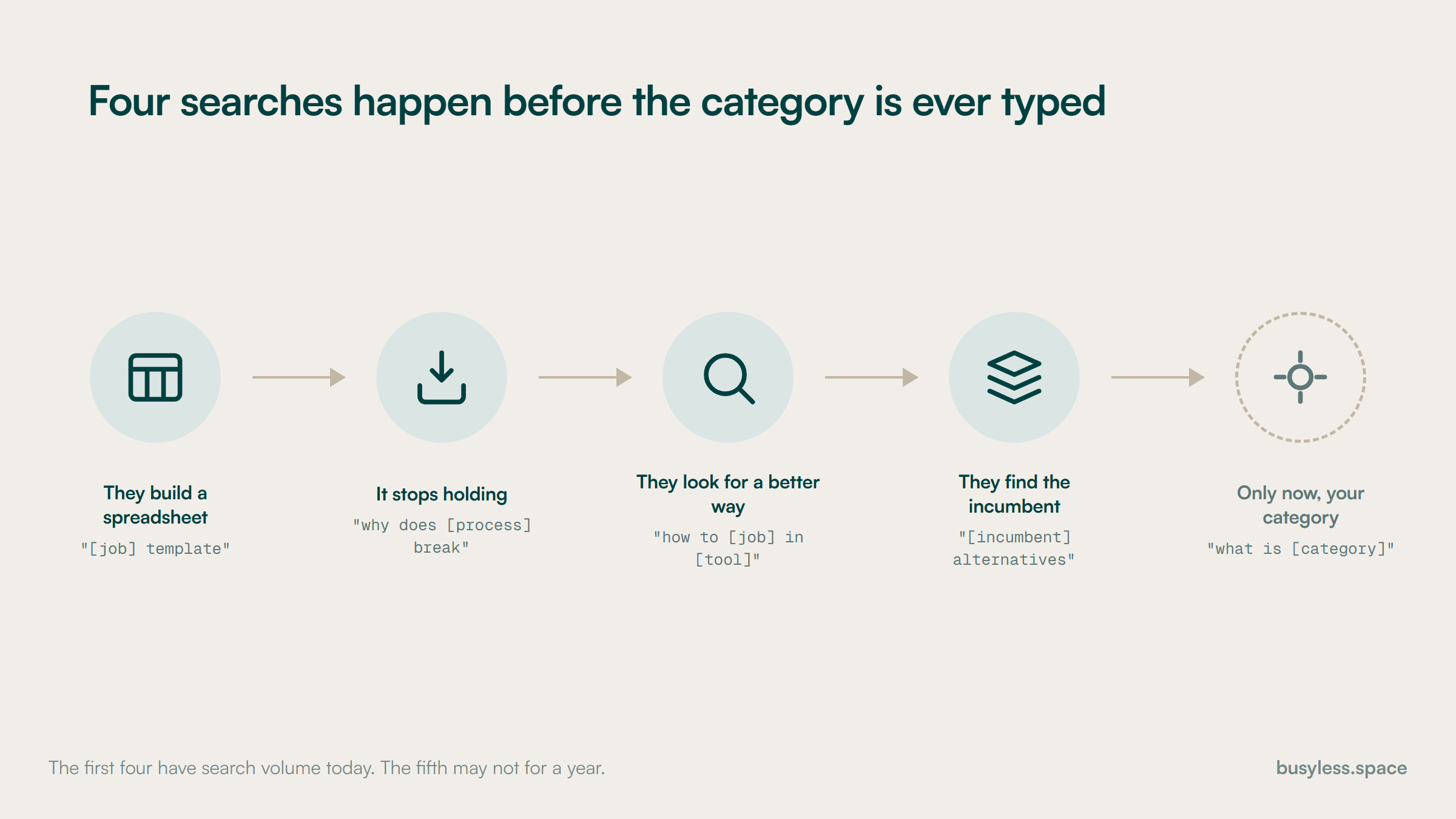
One per serious incumbent, revised twice a yearReal search demand from day one, from people who have already decided they want something else. The only high-intent query a new company can realistically compete for.
Founder-written problem content
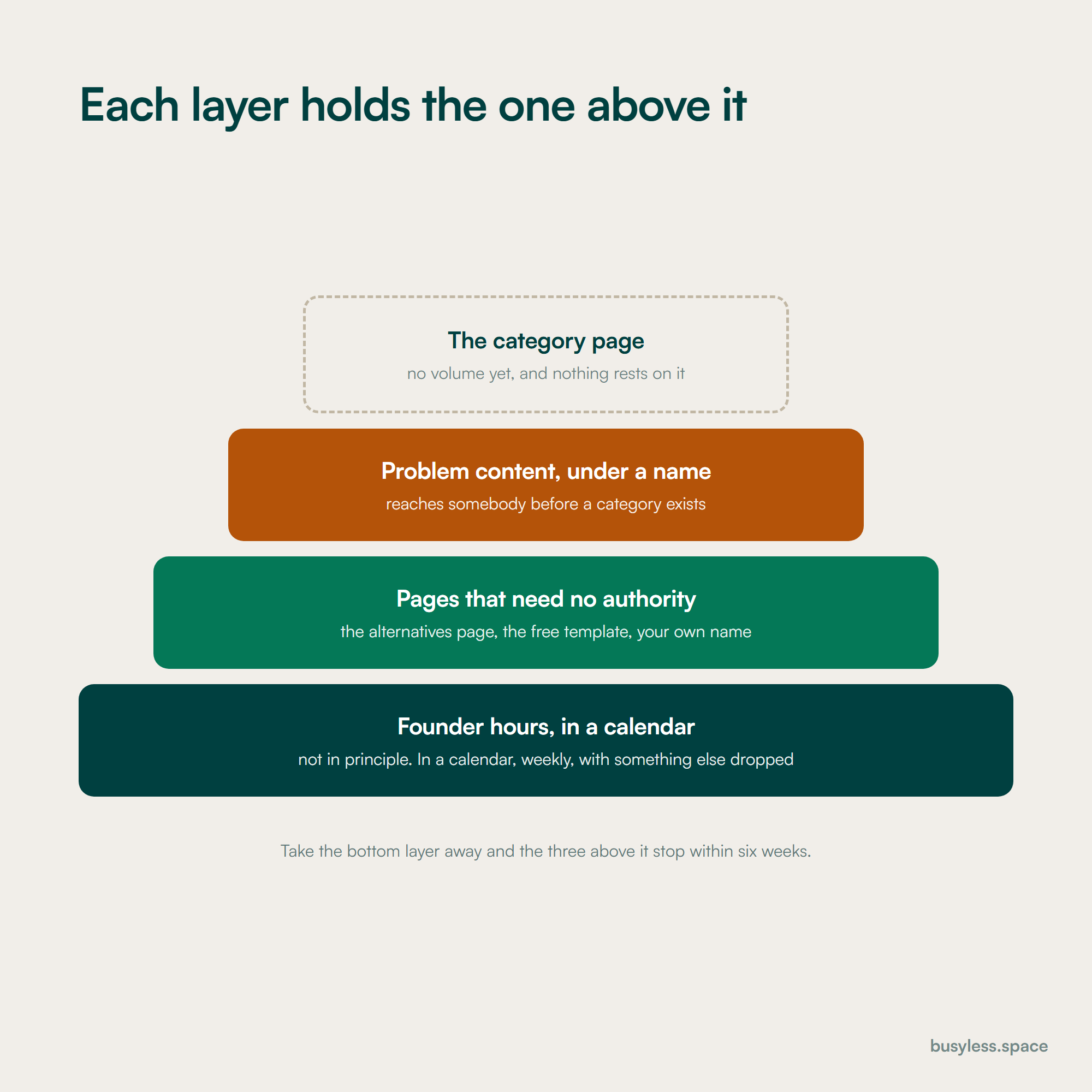
Whatever the founder will actually sustain, which is usually less than plannedThe credibility comes from having done the job, which cannot be outsourced. It is also the material that gets quoted, which is how a new domain earns its first real links.
The guide to doing it in the adjacent tool
One per tool people genuinely misusePeople are already forcing a general-purpose tool to do this. Nobody writes the guide because it recommends a competitor first, which is exactly why it works.
Open documentation
Continuous, as part of shippingThe most specific and most trusted content the company owns, and the strongest evidence to a stranger that the product is real. It also ranks for questions marketing pages cannot answer.
The limitations page
Once, updated with the roadmapSaying what the product does not do yet converts better than most founders expect, and it is the page that makes every other claim on the site credible.
And what not to
- Vision and manifesto posts. They reach investors and peers, which is a real audience and is not the one with the problem.
- Funding announcements as content. The coverage is a day, the page is forever, and it tells a buyer nothing about whether the product works.
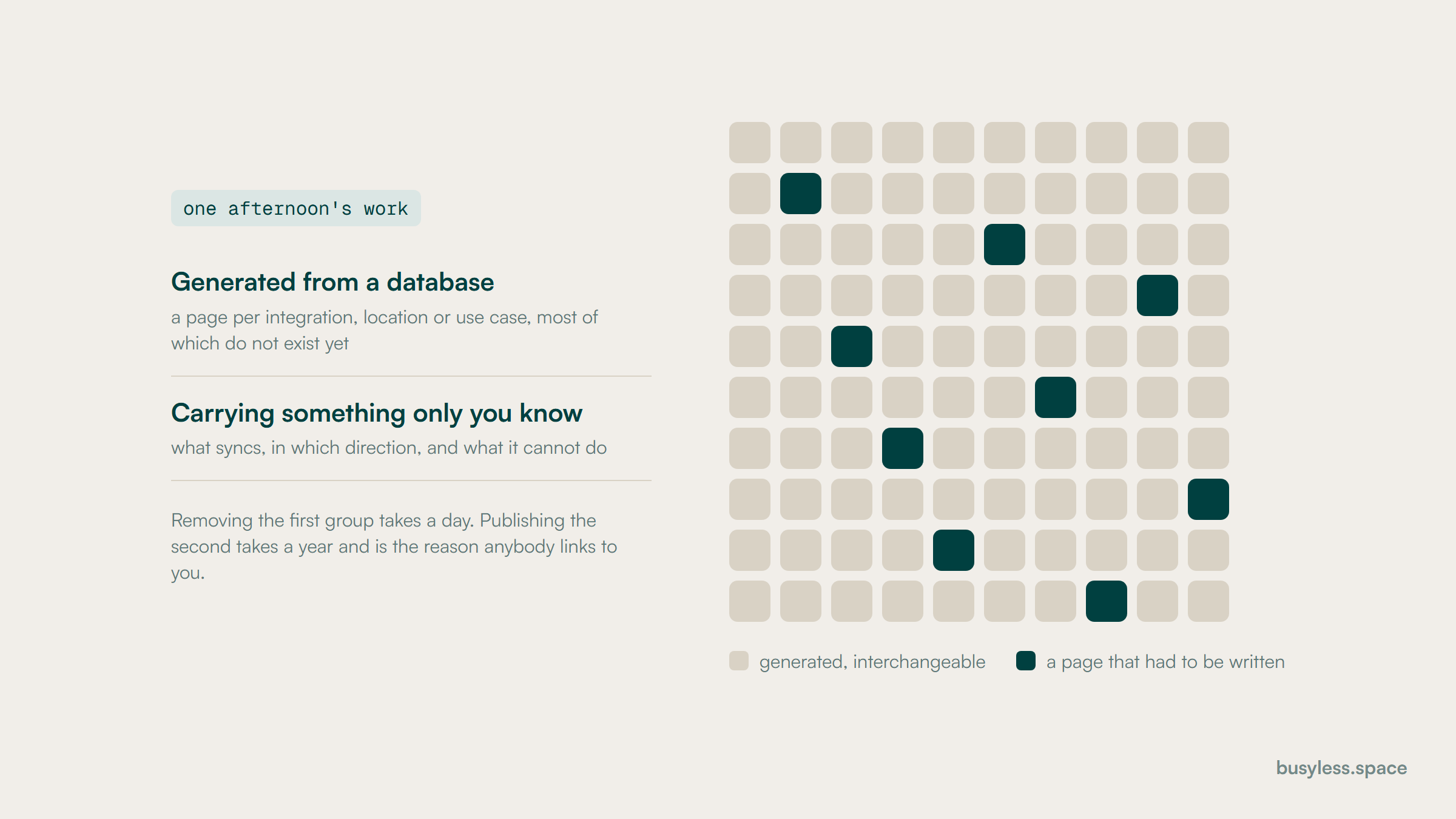
- Thousands of generated pages for integrations, locations or use cases that do not exist yet. Cheap, fast, and the exact shape of scaled content abuse.
- Ranking attempts on the category name before anybody searches it. Publish the definitional page and then leave it alone.
- Ghostwritten founder content in a voice the founder does not have. The audience for early-stage writing is small and it notices.