
What to publish
Everything below is written for somebody who has not decided yet. That is the constraint that rules out most of what studios publish, which is written for somebody who already cares.
The honest comparison page
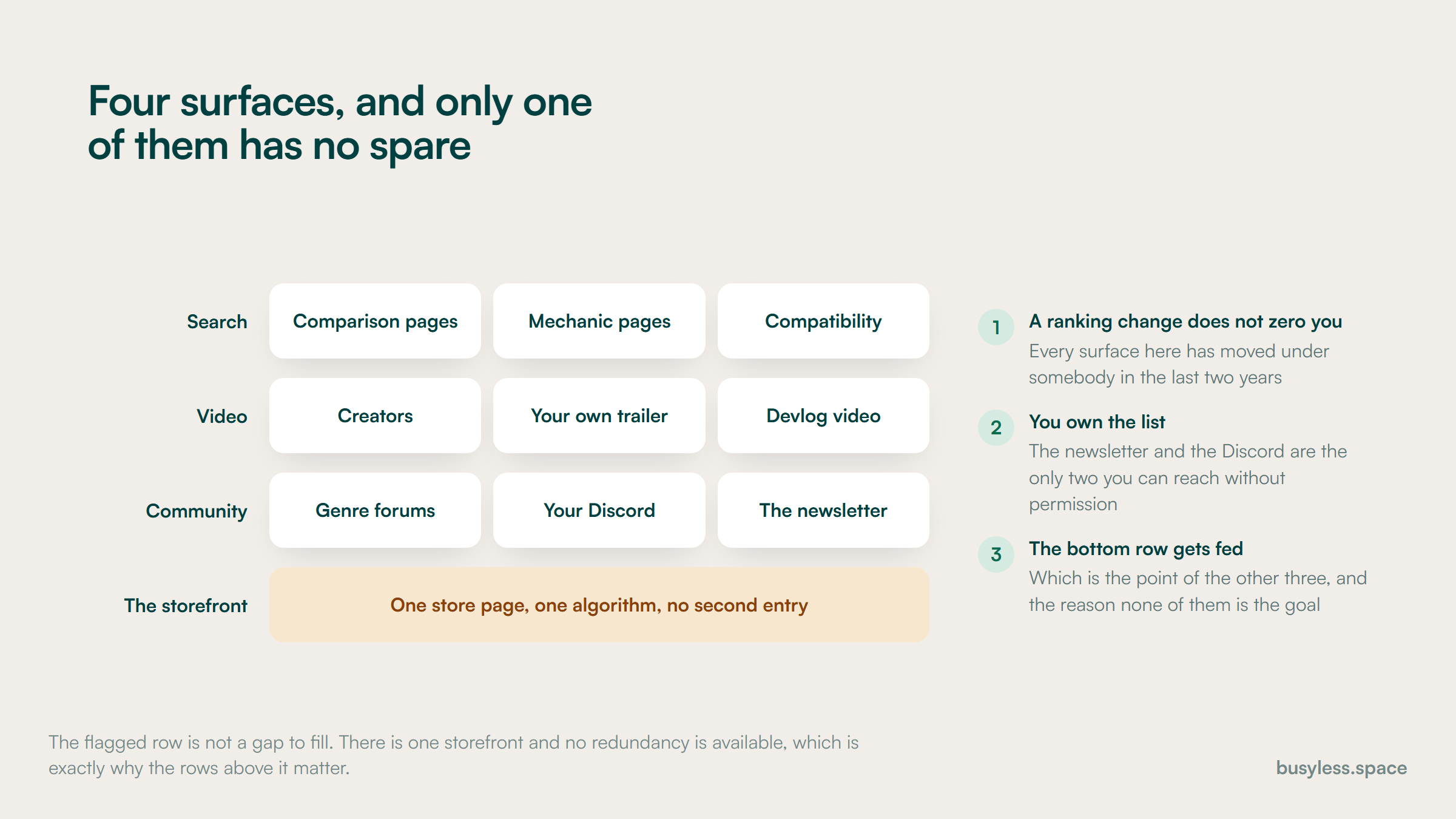
One per adjacent title, two or three in totalIt answers the highest-value query shape in the industry, and the honesty is what makes it work: a page that names the games that fit better than yours gets recommended by people who are not you.
A page per mechanic or constraint
One a fortnight, indefinitelyPlayers describe games by what they do. Each of these pages is tiny, specific and almost uncontested, and collectively they are how somebody finds a game they did not know existed.
The what-to-expect page
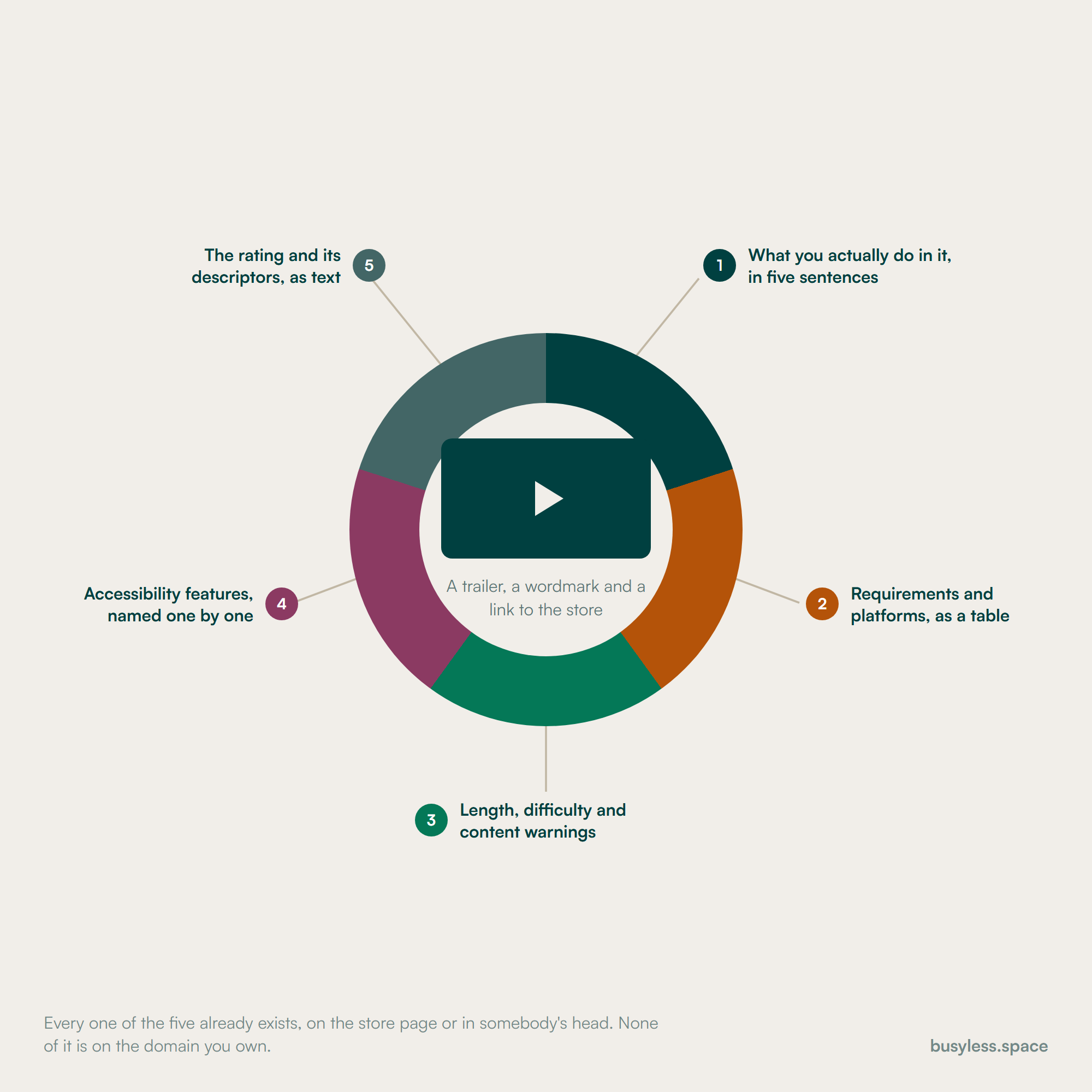
One per game, revised at each major updateLength, difficulty, content warnings and accessibility in one place. It answers a purchase objection, it serves an audience that is genuinely underserved, and third parties are answering it for you today.
The compatibility page
One per game, updated whenever it changesRequirements, controller support, deck status, platforms, offline play and cross-play, as text. It is the most searched practical thing about any game and it is usually a screenshot.
The devlog
Monthly, and judged on hiring and reputation rather than on wishlistsGenuine technical write-ups earn peer links, conference invitations and job applications. Valuable, and worth doing for those reasons rather than for the ones people claim for it.
The press kit
Once, then reviewed before every beatIt is the only asset here whose audience is a person on a deadline, and it is the difference between being covered and being skipped.
The work-for-hire section
Once, then a case page per project you are permitted to nameA publisher searching for a co-development or porting partner is a completely different buyer, and they search by engine, platform and discipline. If it is a real line of business it needs its own section.
And what not to
- Announcement posts as a content strategy. They reach people who already follow you, which is the audience you did not need to reach.
- Lore and worldbuilding before launch. It is the writing everybody wants to do and it is read by people who have already bought the game.
- "Top 10 games like ours" pages that exist to rank rather than to help. They are transparently self-serving, they do not get linked, and they are the version of the comparison page that fails.
- Chasing the genre head terms. The enthusiast press owns them, they have owned them for fifteen years, and a studio site is not going to take them.
- A blog that mixes devlog, announcements and marketing in one feed. The three have different audiences and the feed serves none of them.