What to publish
What to publish, ranked by how well it works against how hard it is to get through attorney review. The second half of that sentence is the real constraint in legal: the bottleneck is almost never writing, it is a partner with twenty spare minutes and no billable reason to spend them. SEO content writing for law firms is bought badly for exactly that reason.
Do-I-have-a-case qualification pages
One per practice area, then reviewed annuallyThe highest-value cluster in legal search, and the one that filters enquiries before they reach intake. A page that honestly says when there is no claim earns the trust for the situations where there is one.
Deadline and limitation pages by jurisdiction
One per state, reviewed when the rules changeUrgent, high intent, jurisdiction-bound and genuinely useful. Also the fastest to write, because the statute says what it says.
Attorney bio pages
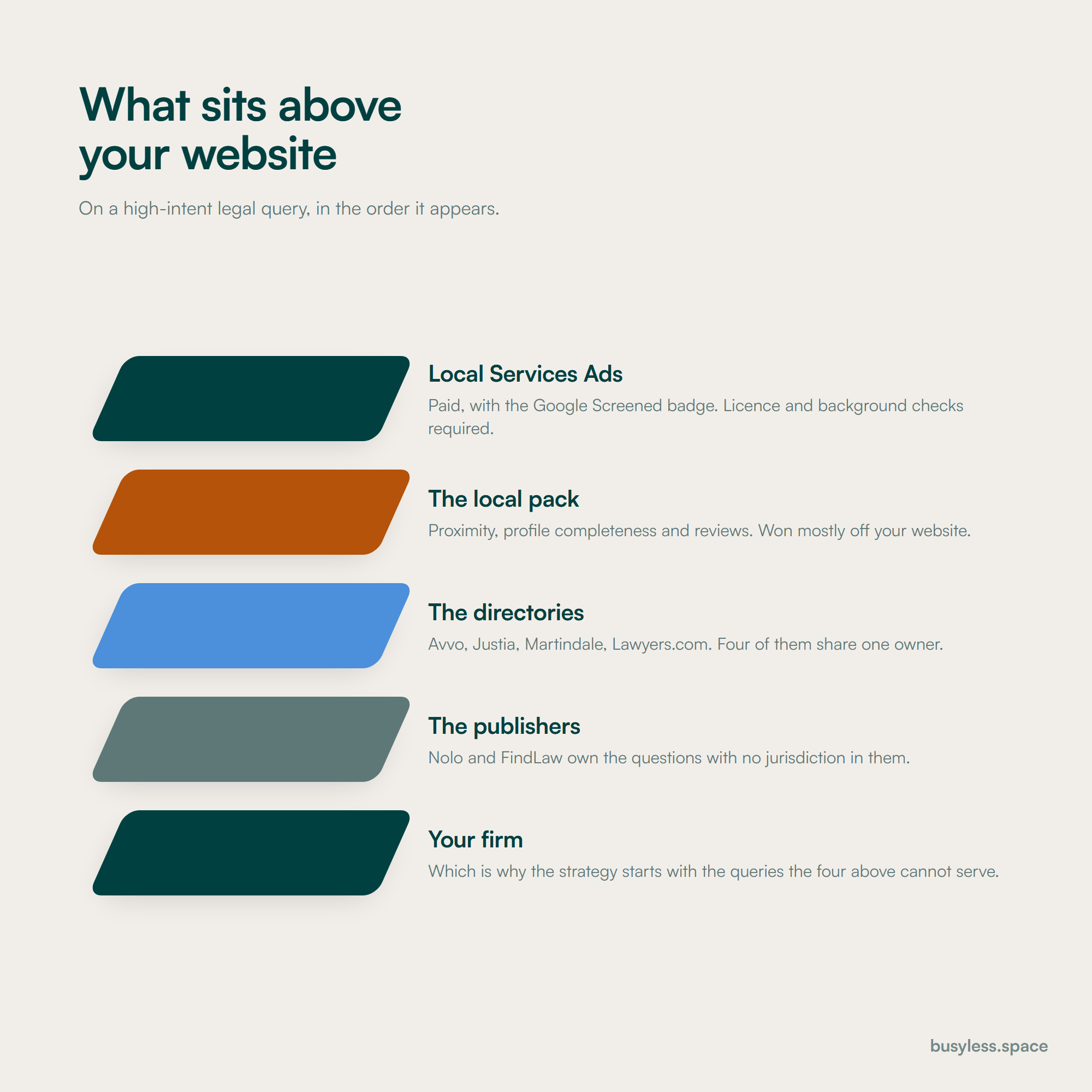
All of them once, then on each hireServes the expertise bar directly, wins back the name queries from the directories, and is the page referral sources actually read before sending anything over.
A real fee page
Once, reviewed annuallyThe blocker most firms refuse to address. Publishing structure and ranges filters out the enquiries you did not want and shortens the ones you did.
Process explainers by county
One or two a monthLong tail, low competition, and it compounds. Each county version is a small page nobody else has bothered to write, and it is checkably local in a way a national publisher cannot fake.
Case results in HTML with the disclaimer in the template
Once to migrate, then as matters resolveThe most persuasive content the firm owns, currently in the least crawlable format available. Moving it is a technical job more than a writing one.
And what not to
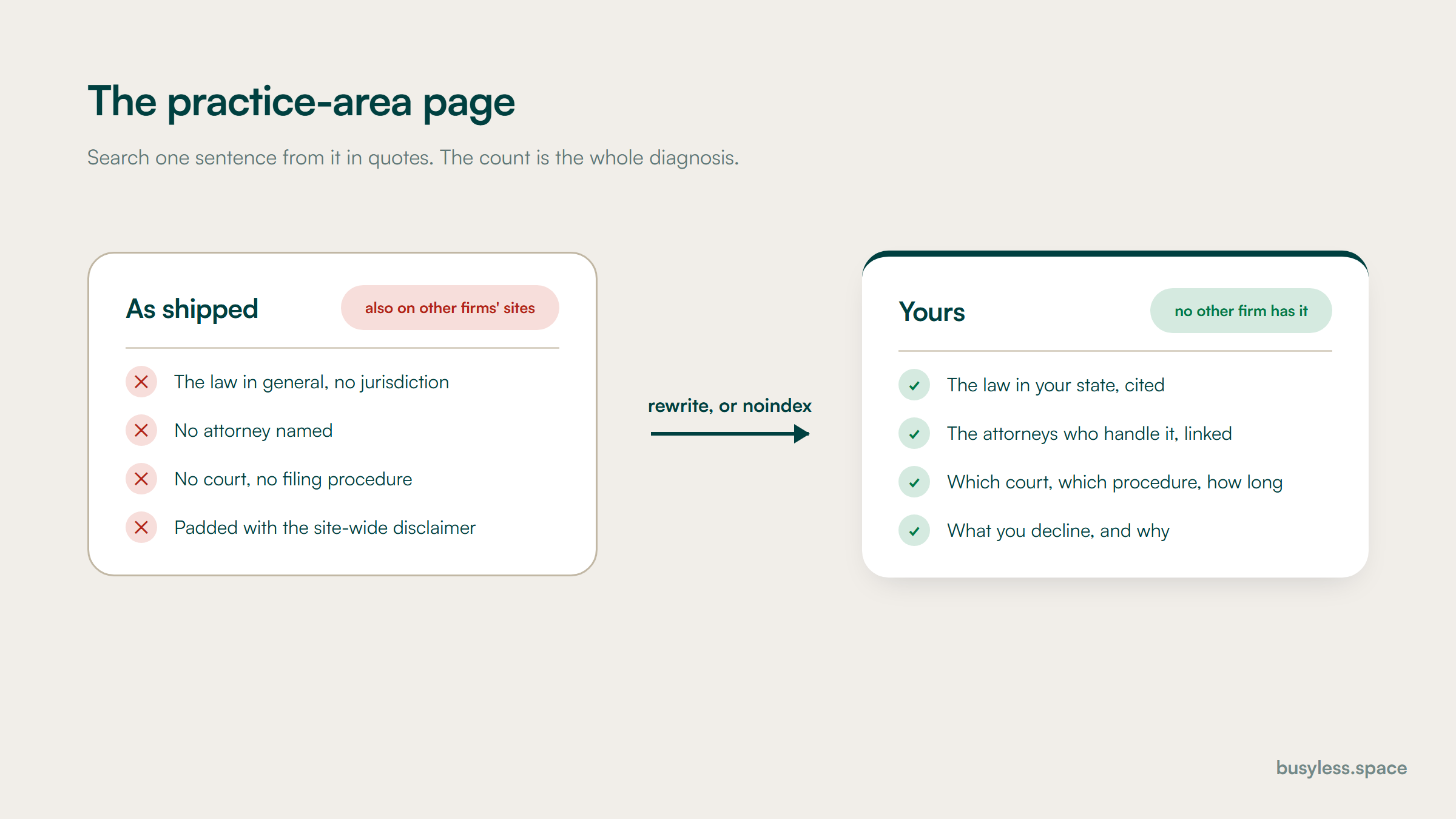
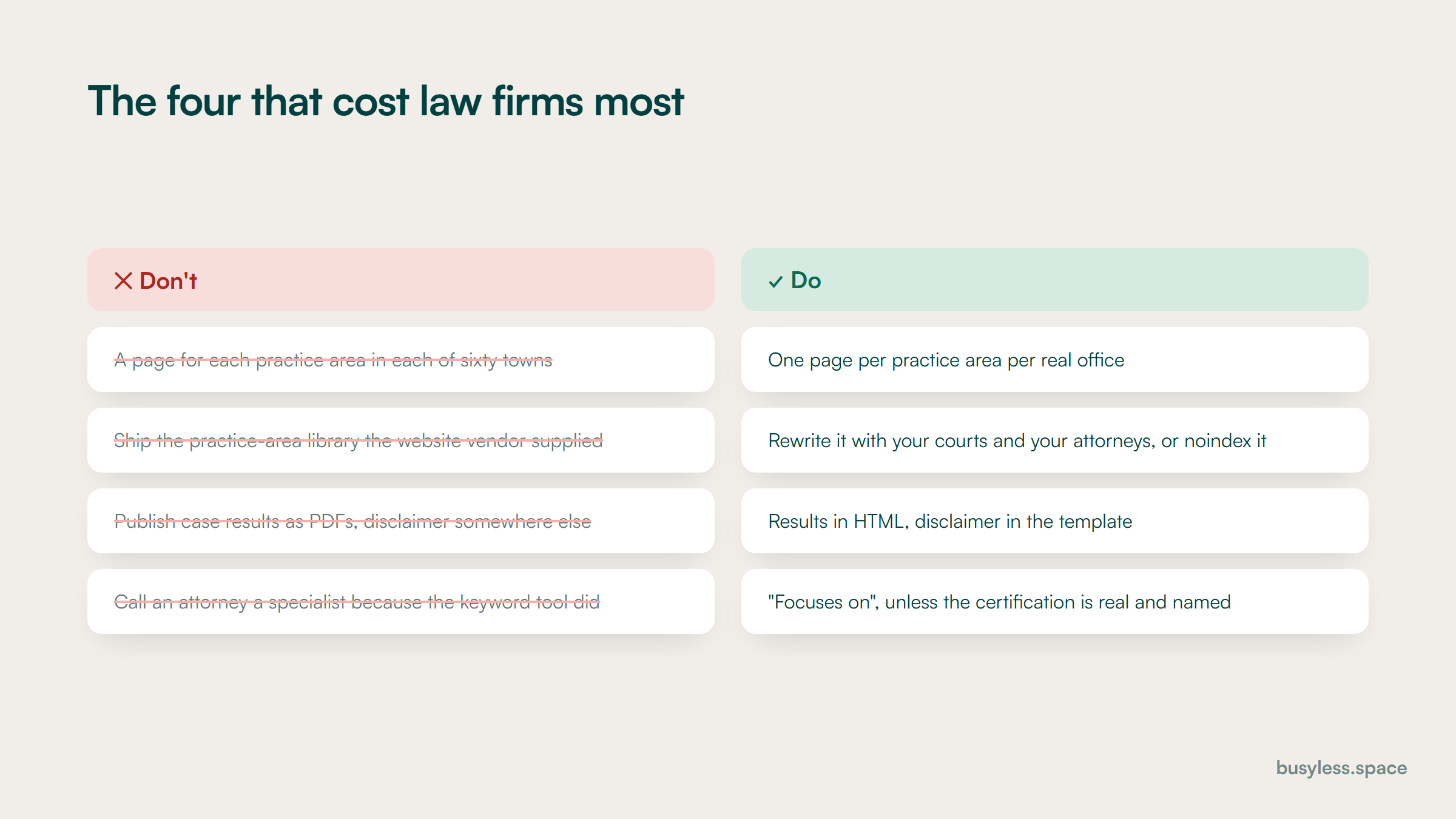
- Syndicated practice-area libraries left as shipped, which put you in word-for-word competition with every other firm on the same platform
- Practice area times city pages generated for towns the firm has no presence in, which is close to Google's own definition of a doorway page
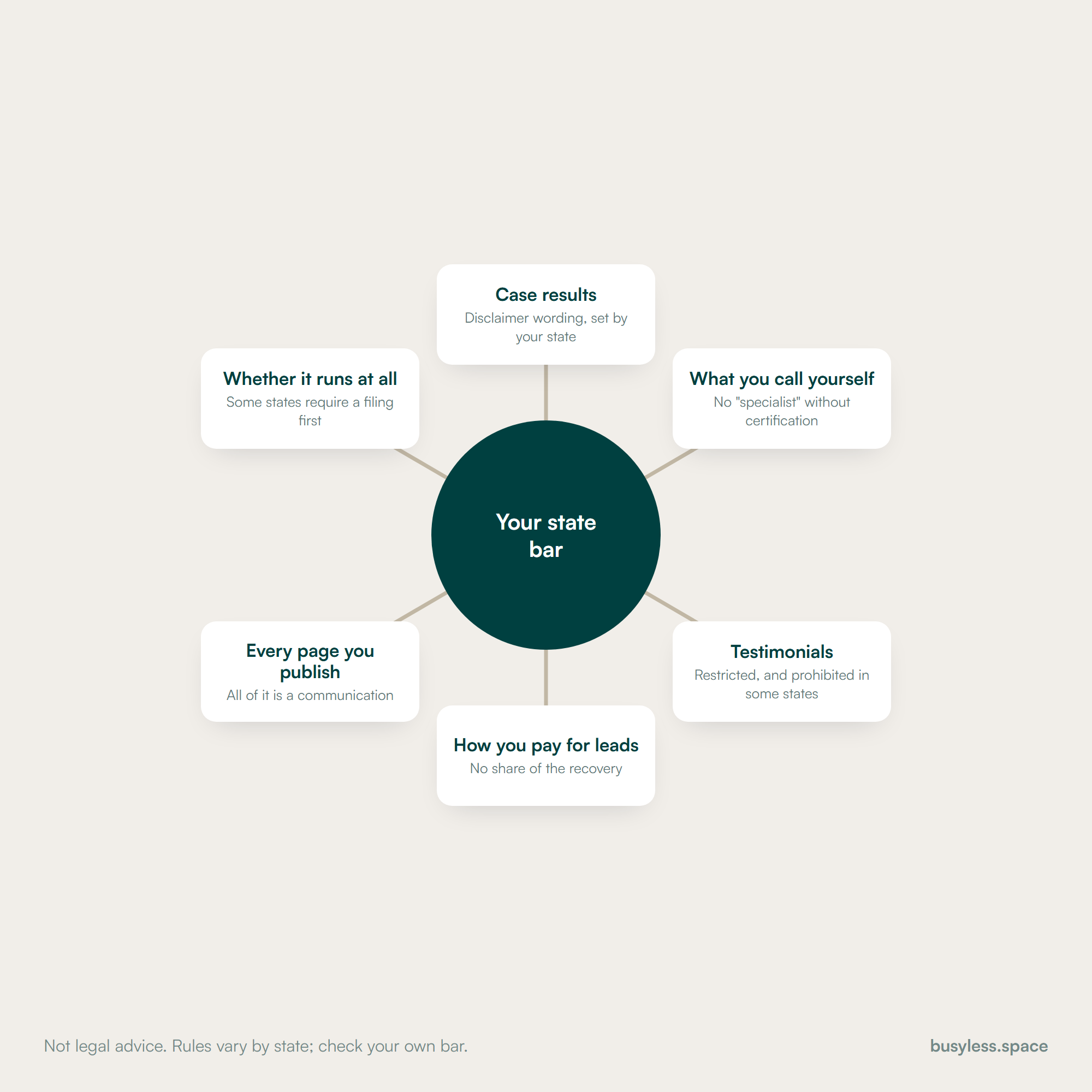
- Anything using specialist, expert or best where the certification is not real and named
- Case results published without the disclaimer your state requires, which is the most common violation on a law firm website
- General legal explainers with no jurisdiction stated, which are both uncompetitive and unhelpful
- AI-written legal content published without an admitted attorney reviewing it, which fails the expertise bar exactly where it is strictest and is a professional risk before it is an SEO one