
What to publish
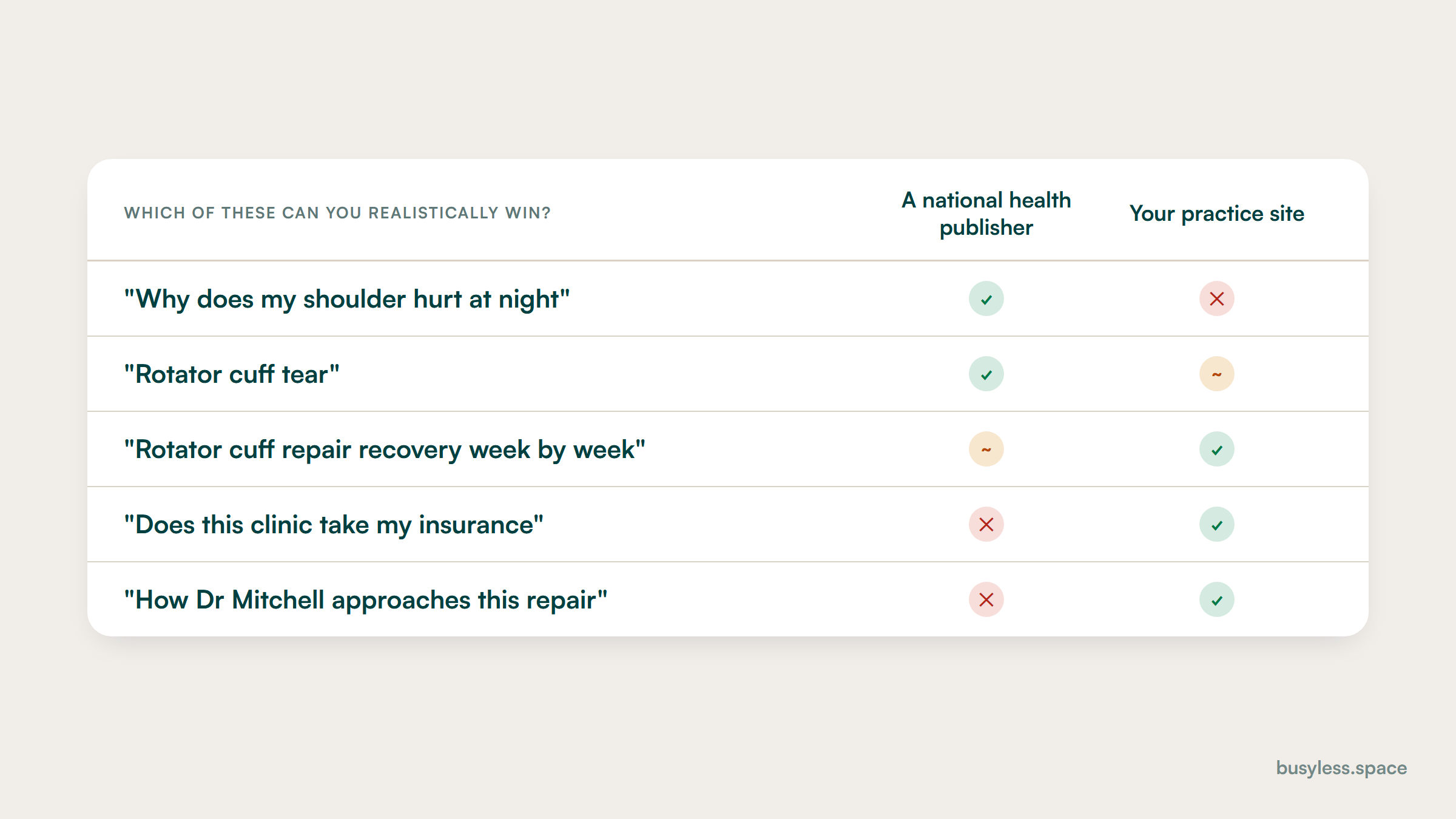
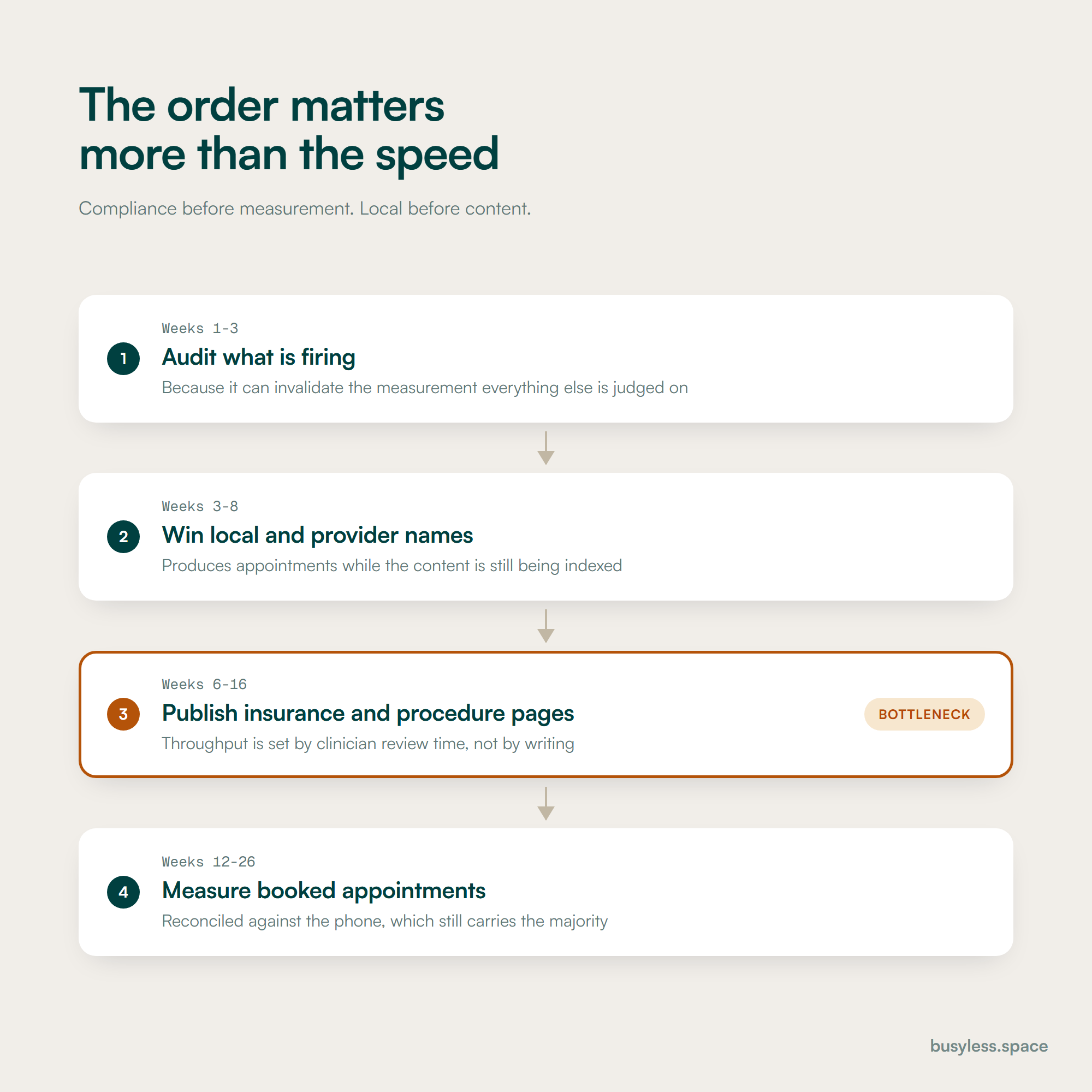
What to publish, ranked by how well it works against how hard it is to get through clinical review. The second half of that sentence is the real constraint in healthcare: the bottleneck is almost never writing, it is a clinician with fifteen spare minutes.
Accepted-insurance and cost pages
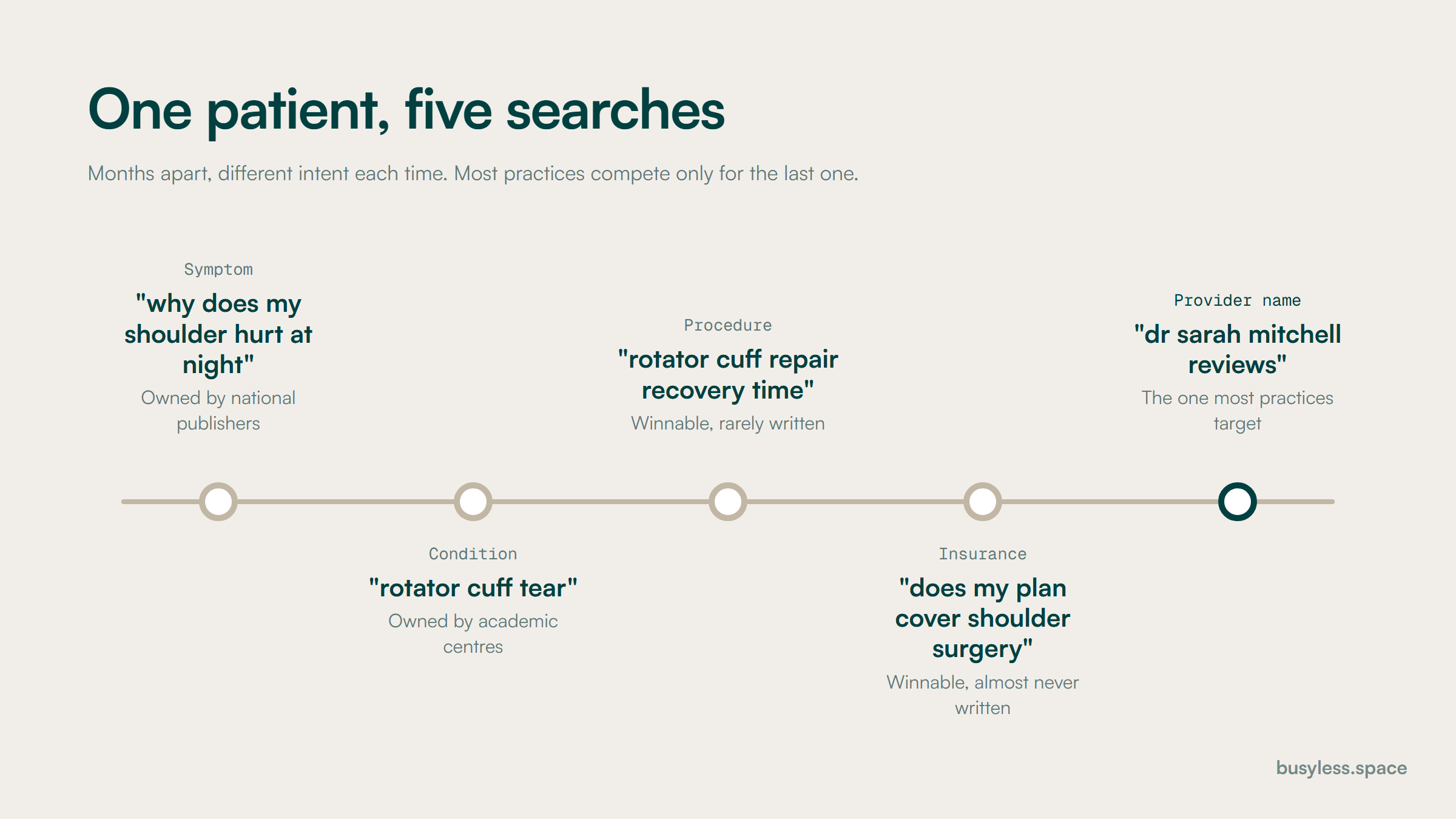
Once, then reviewed each time a payer contract changesThe last question before booking, almost never answered properly, and it needs no clinical review because it is administrative rather than medical.
Procedure pages with recovery timelines
One or two a month, prioritised by margin and volumeHigh commercial intent, far less contested than condition terms, and the recovery question is the one patients actually search.
Provider bio pages
All of them once, then on each hireDirectly serves the expertise bar, wins back the practitioner-name queries, and converts better than any other page on a practice site.
Condition pages written as your practice treats the condition
One or two a month, always with a named reviewerThe one version of a condition page a national publisher cannot write, because it describes your pathway and your clinicians rather than the condition in the abstract.
Honest comparison pages
One a quarterNaming the cases where the conservative option is right reads as clinical judgement, and comparison formats are disproportionately cited in AI answers.
Location pages with something only that location has
Once per location, revisited when providers moveSupports the local pack and gives multi-site groups a reason for each page to exist beyond the address.
And what not to
- Syndicated condition libraries left as shipped, which put you in word-for-word competition with a hundred other practices
- General health blogging with no route to a service you provide, which earns traffic that never books
- Symptom content published without a triage instruction, which is a clinical risk before it is an SEO decision
- Anything claiming an outcome you cannot substantiate, which is a regulatory problem in a category already held to the highest quality bar
- AI-written clinical content shipped without a named clinician reviewing it, which fails the expertise bar precisely where it is strictest