
What to publish
Everything below is either a fact the estate already holds or a question a visitor already asks. Neither of the two obvious wine content ideas appears, because the regulator has closed both of them.
A page per wine per vintage
Every wine, every vintage, kept live afterwardsThe unit of this business and the thing the aggregators currently define on your behalf. Tech sheet detail as page text is the single largest available gain.
The visit page
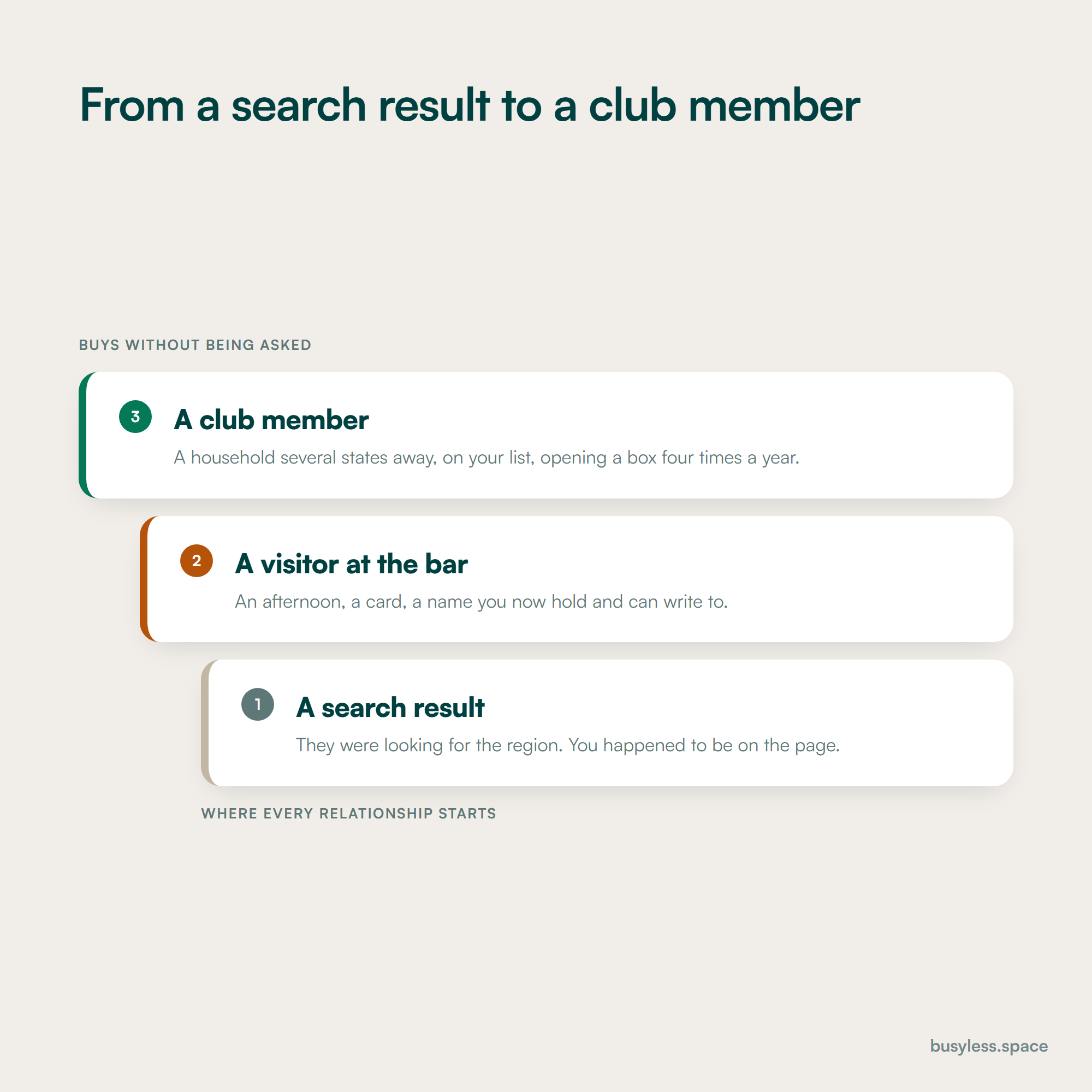
Once, revised at each seasonal changeHours, reservations and what a tasting costs, answered before anybody has to call. It is the top of the club funnel and most estates bury all three facts.
Vineyard and block pages
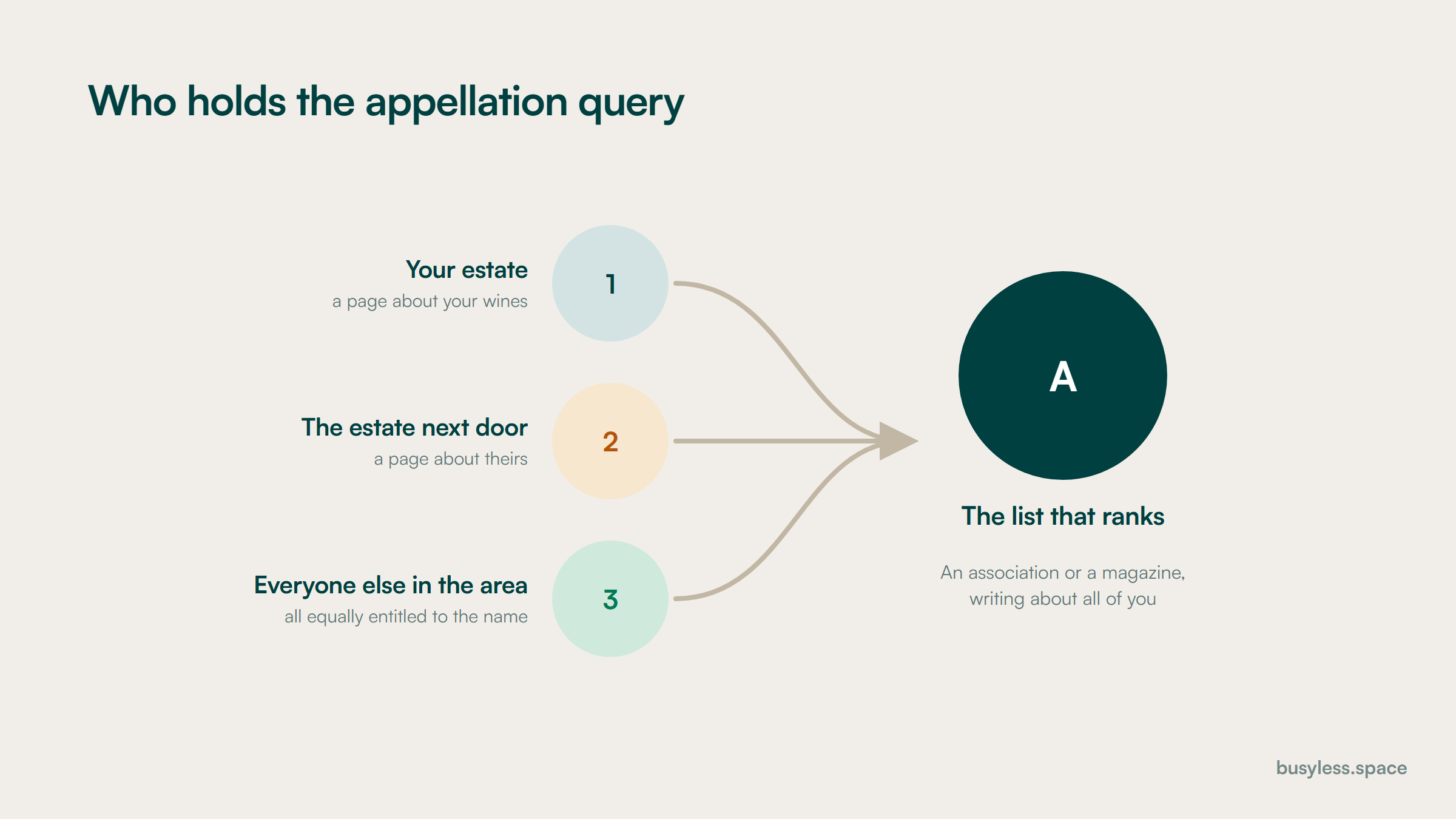
One per named blockSoil, elevation, aspect, clone and planting year are unrepeatable facts that no competitor can copy and no writer can invent. They are also the honest way to earn a region query.
Pairing and serving guides
One a month, tied to wines you actually makeThe safe content lane, making no claim about health and none about a competitor, and bringing back people who already bought a bottle.
The shipping page
Once, reviewed whenever a state changesA compliance document that is also a keyword, read by somebody with a full basket. It converts and it removes support load at the same time.
Events with real dates
As scheduled, published as pages rather than as an imageRelease weekends, harvest events and dinners are searchable, marked up as events, and the most reliable reason for a lapsed visitor to come back.
And what not to
- Health benefit articles, which are a restricted claim rather than a content idea
- Comparison pages naming a competitor's wine, which the rules treat as disparagement
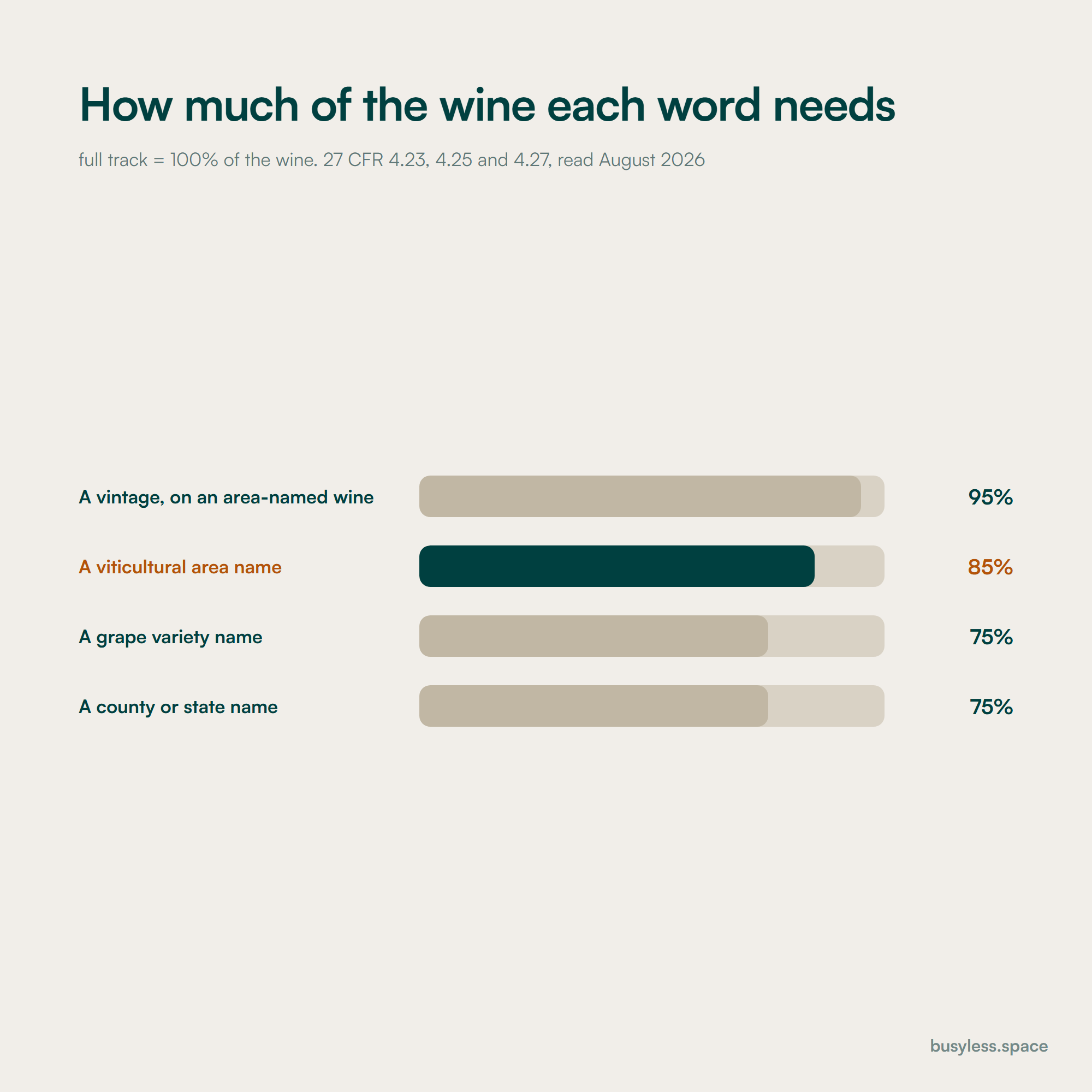
- Appellation pages for a region your wine does not legally qualify to name
- Tech sheets left as PDFs while the aggregators outrank you on your own wine
- Grape variety explainers for varieties you do not grow, which publishers own